Author Archives: Quirky Quad

Secret garden survives astonishing Kunming floods!

Standard

This past week I have managed to stand twice a day for 30 minutes each time. This is a really great development, suggesting my knee has finally mended itself.

On Monday I will, once again, re-start the walking program.  Thankfully, my big brother Colin arrived in Kunming a few days ago, coming all the way from Atlanta, and he will be here for another week.  Colin is a very strong and tall guy, coming in at around 6’4”.  He will provide extra insurance in case anything goes sideways when I start walking next week.  The idea is that he will step in and help get me sitting quickly if he thinks I’m about to get injured again.

My neck is also on the mend and only starts to ache after many hours sitting upright without my neck brace in the afternoon. With that said, I was able to use my manual chair yesterday for the first time since the surgery and get out of the house to go hang out in downtown Kunming.  It was nice to see the “outside world” again as I’ve spent the last eight weeks either at the hospital or in my apartment.

I must admit, though, it has not been all that bad being cooped up in the apartment recently, because my mother and a now a dear new family friend, Fried, have transformed our backyard into the most unbelievable little garden, filled with fruit trees and plants … strawberries, blackberries, blueberries + oranges and figs and even a beautiful peach tree.  Yunnan Province must be pretty close to the Garden of Eden.  Everything seems to grow here in great variety as well as abundance.

Fried is a German fellow who has been living in Kunming for almost a decade after bicycling over here on his own all the way from Germany!

Today Fried has a Chinese wife and infant daughter and owns the premier late-night live music bar called the “Moon Dog” where foreigners and locals alike hang out for the amazing whisky selection as well as live music.

In Germany Fried also practiced professional landscape design and thus had the experience (and local knowledge) to help Mom turn a backyard full of weeds into a little slice of paradise in the space of just two weeks!   And now we even have a beautiful patio area where we can smoke Padron cigars in peace.

🙂
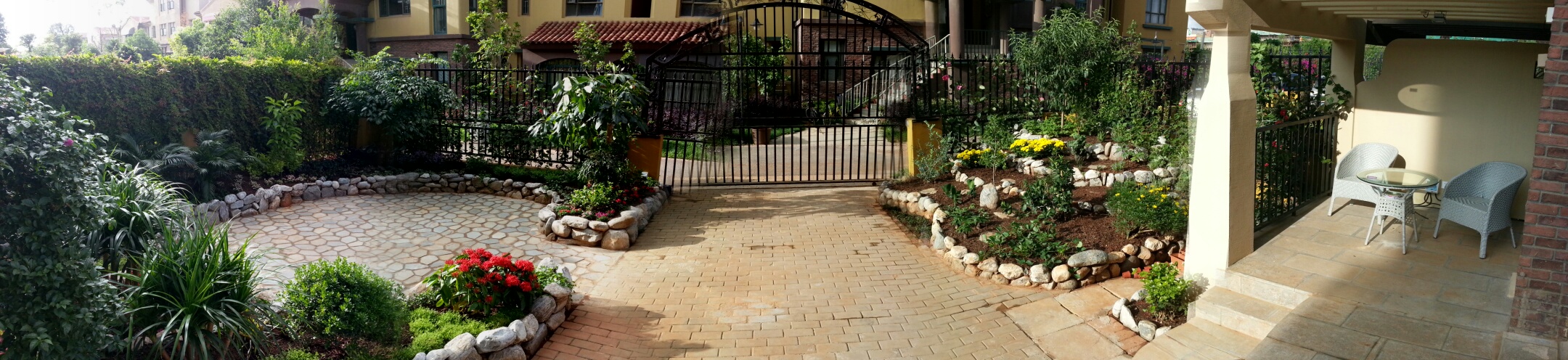
Panoramic view of the garden
Panoramic view of the garden

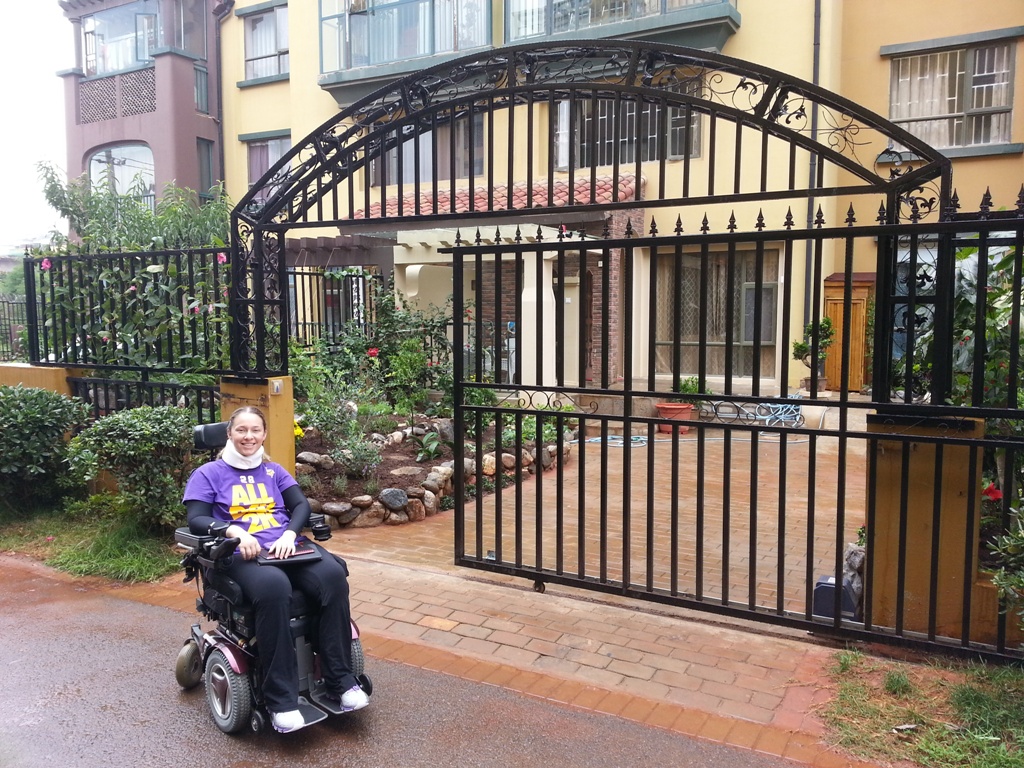
Outside of front gate

Electric gateway to our secret garden!
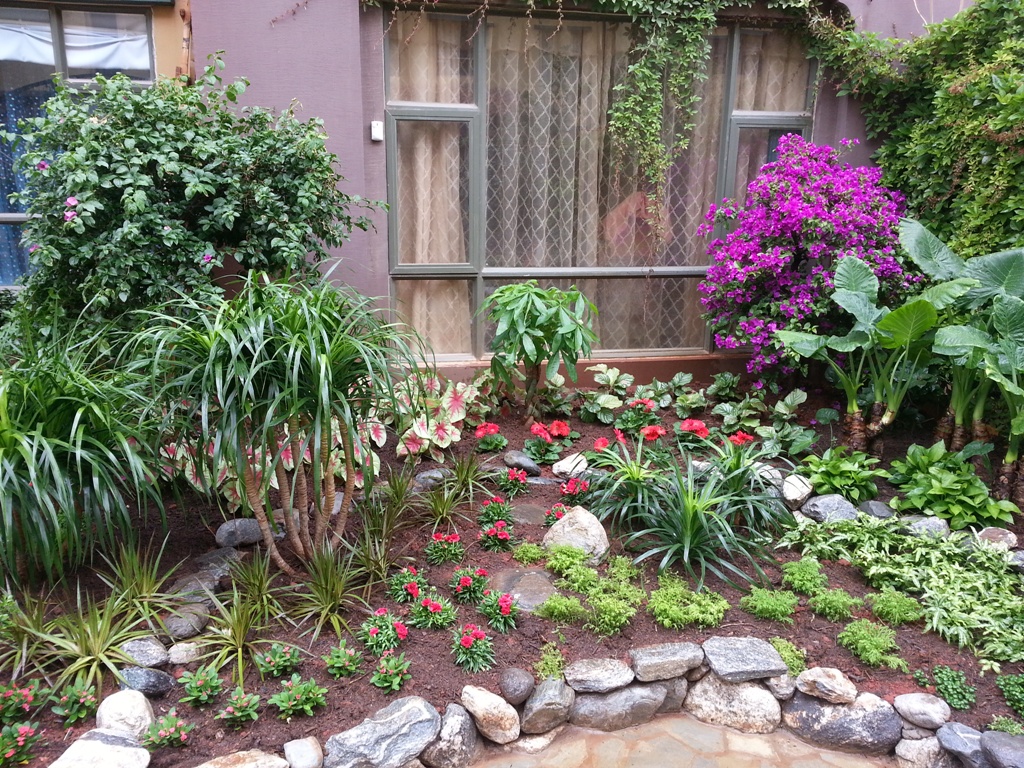
Garden area outside of my bedroom

View towards my bedroom window.

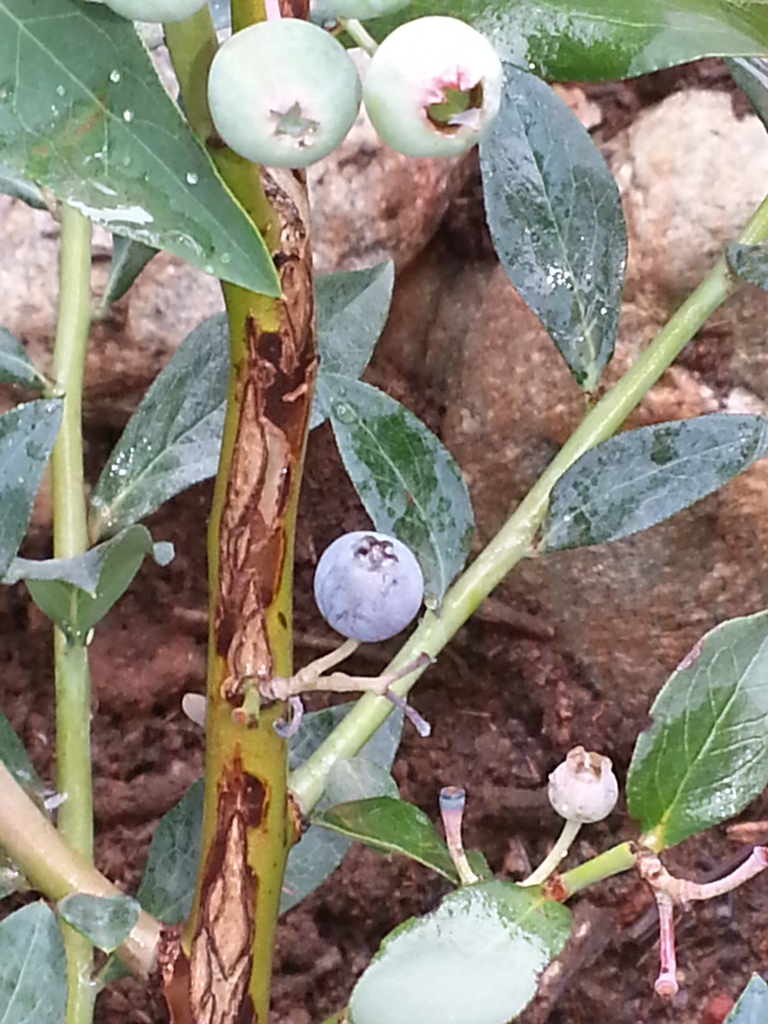
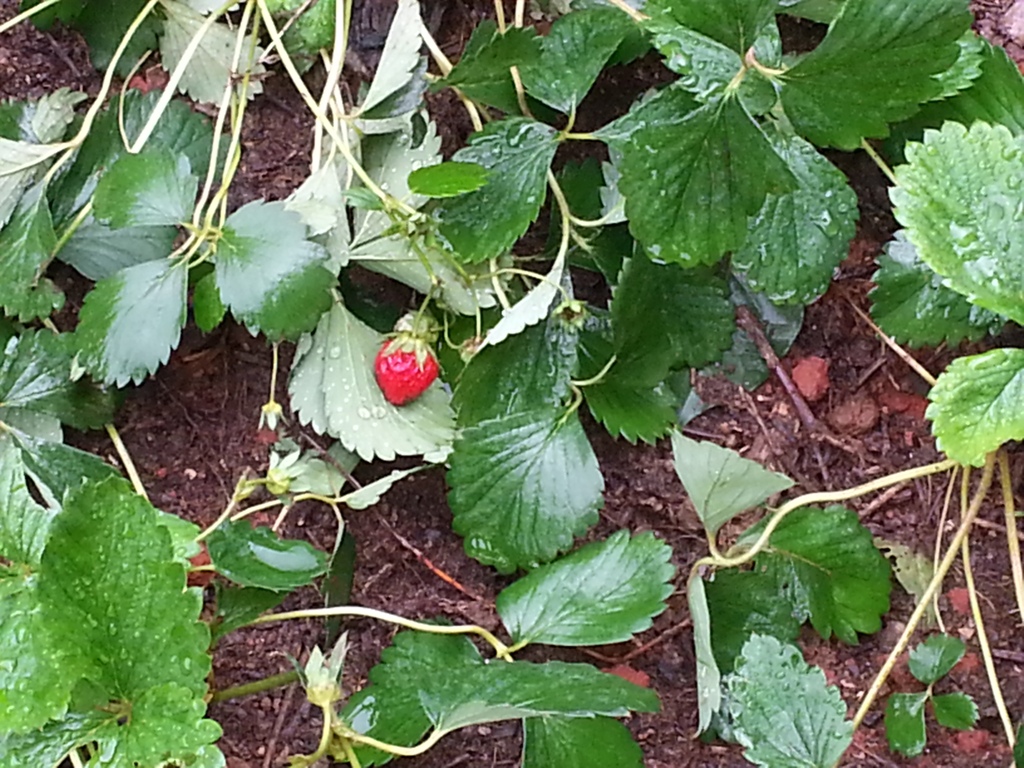
First blueberryFirst strawberry

Blueberries … strawberrries … eat ’em as you pick ’em!
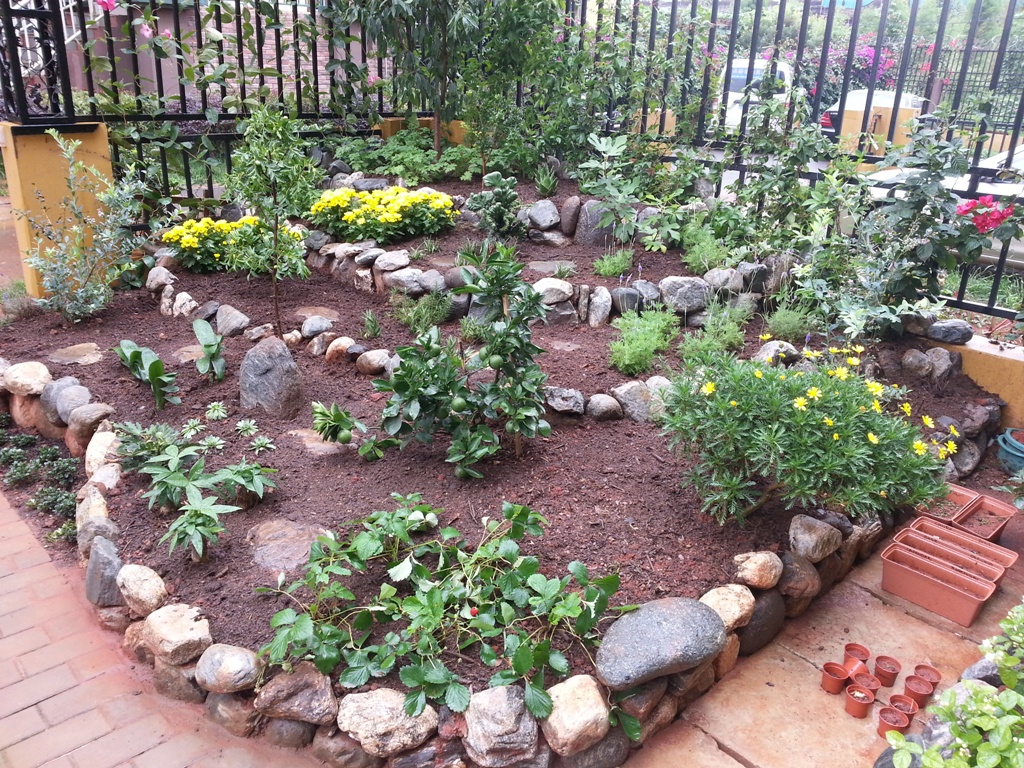
Vegetable and Fruit Section of the garden

Fruit and herb section of  new garden

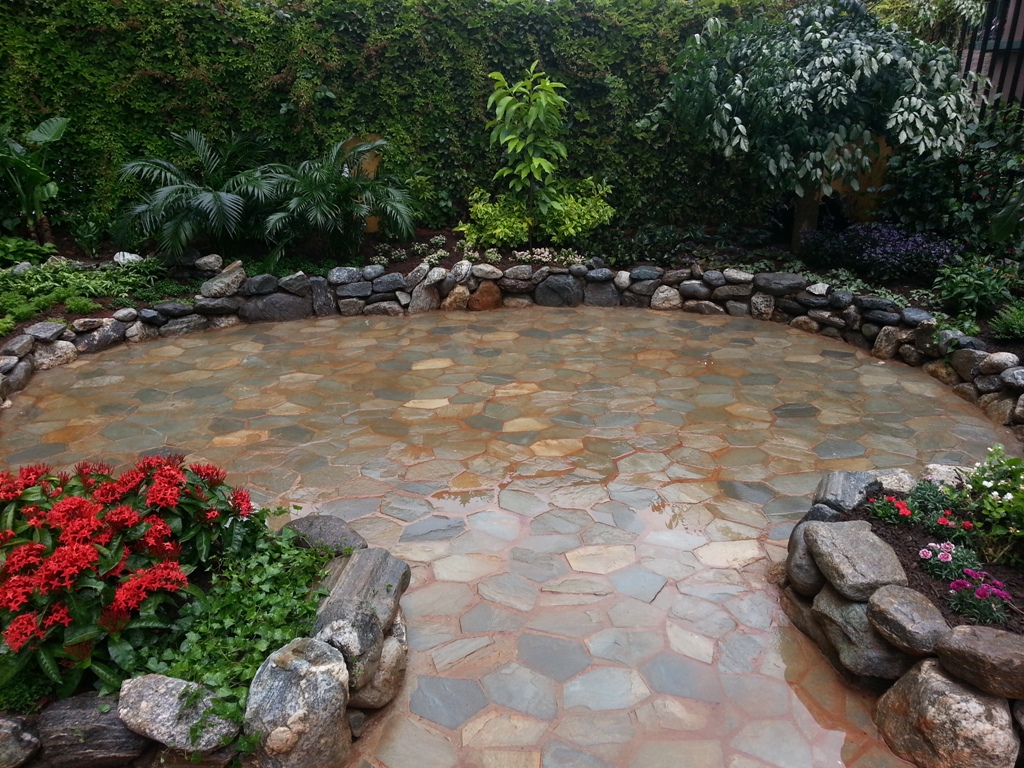
Patio Area

Still to go is a vine-covered trellis for shade.

Over the last few days it has been pouring cats and dogs in Kunming, and we were worried that our garden would be washed away.  To our surprise and delight, not even one flower was destroyed.  However, downtown Kunming experienced flooding that reminded me of Miami after a hurricane.

Downtown was so flooded that thousands of cars were washed away … people in makeshift boats were paddling around many streets in stiff currents …  and many hundreds, if not thousands of businesses were underwater … this in a city with more than 7 million population.

http://shanghaiist.com/2013/07/19/photos_heavy_flooding_in_kunming.php

Luckily, I live in the South West of Kunming where the floods were relatively minor.

My father left this afternoon for Hong Kong on the first leg of what we not-so-jokingly refer to as his first  “Global Pain Tour” … scheduled for the next month.   As my regular readers will recall, my neuropathic pain has unfortunately not decreased since the surgery and continues to seriously impact my rehabilitation on a daily basis.  And allodynia makes even touching my hands and arms feel some days as if glass from a broken bottle were being ground in!  I will go into more detail in future blogs as our pain management strategies develop.

The initial Global Pain Tour involves meeting both research neuroscientists as well as clinicians offering strategic insights as well as potentially useful therapies, all of which I’m game to try.  Meanwhile, we have just launched a parallel effort here in Kunming, which is a major centre for Traditional Chinese Medicine.  Specifically, we are investigating qigong breathing, acupuncture and well-proven, herb-derived nerve pain medicines.  East meets West … again!

I will also be adding pain management as an additional focus to this blog, because a recent U.S. government sponsored grant revealed that approximately 75% of spinal cord injured patients suffer from some form of neuropathic pain.  Many of my SCI friends rely on long-term use of drugs to reduce pain.

My dad and I intend to lay out many different pain management options for the SCI community, because relying on drugs, which admittedly I do at the moment as well, is not a long-term sustainable solution.
Broken leg … what next?

Standard

Sorry to have been off-line for more than a week, as I have been working flat-out to recondition my injured right knee.

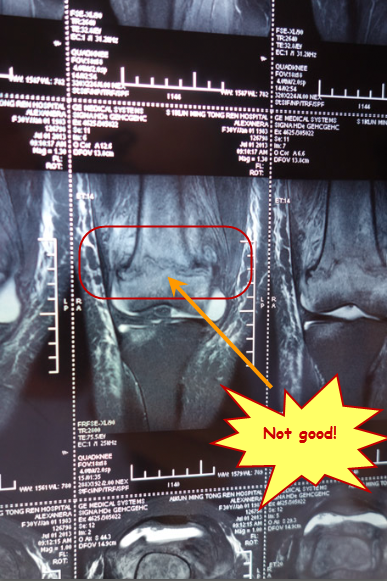
Believe-it-or-not … turns out I’d broken my leg!

Yep, major fracture right above where the femur joins the knee.

Broken Leg

Broke my leg after I broke my neck!

This plainly did not happen recently, as it had healed pretty well and without mis-alignment.

But it seems likely that the ligaments that hold my right knee together had been compromised by whatever caused such a major fracture.

I’d been able to stand okay here in Kunming, but once I started to “walk” the right knee gave way … and, as they say in boxing, I was down for the count.

The break was discovered after I stopped resisting the medical advice from the team here and agreed to an MRI.  Because getting into an MRI machine is always such a hassle for me, I can be really stubborn about all but essential MRIs.

So in recent weeks I’ve been working with a heat lamp and exercises to strengthen the knee, and yesterday I was able to stand again for 30 minutes, bearing 100% of my weight and without evident stress.

Next I’ll try two 30-minute standing sessions daily for a few days, and after that I’ll give walking another go.

Otherwise, I’ve been using the VitaGlide to strengthen my neck and shoulder muscles, and this has been going pretty well.  My neck is strong again.

On the pain front, not such great news yet.  I am still dealing with neuropathic pain, and recently my major challenge has been something called “allodynia” — http://en.wikipedia.org/wiki/Allodynia

Allodynia feels like having glass ground into my arms and hands and has kept me away from my keyboard much of the time.  The pain gets worse in the afternoon, and at night it keeps me from sleeping.  In order to get some sleep, for now I use drugs – alternating Amitriptyline and Lorazepam.

I really don’t like using drugs, so this summer my Dad and I are digging into a wide range of clinical research related to pain management.

We are also investigating Traditional Chinese Medicine, which naturally has a huge following in Yunnan Province.    Indeed, here in Kunming we have on offer world-class acupuncture as well as a range of herbal remedies that proprietary pharmaceutical drugs mimic to varying degrees.

I am also investigating hypnosis, and hope to learn a lot about self-hypnosis.

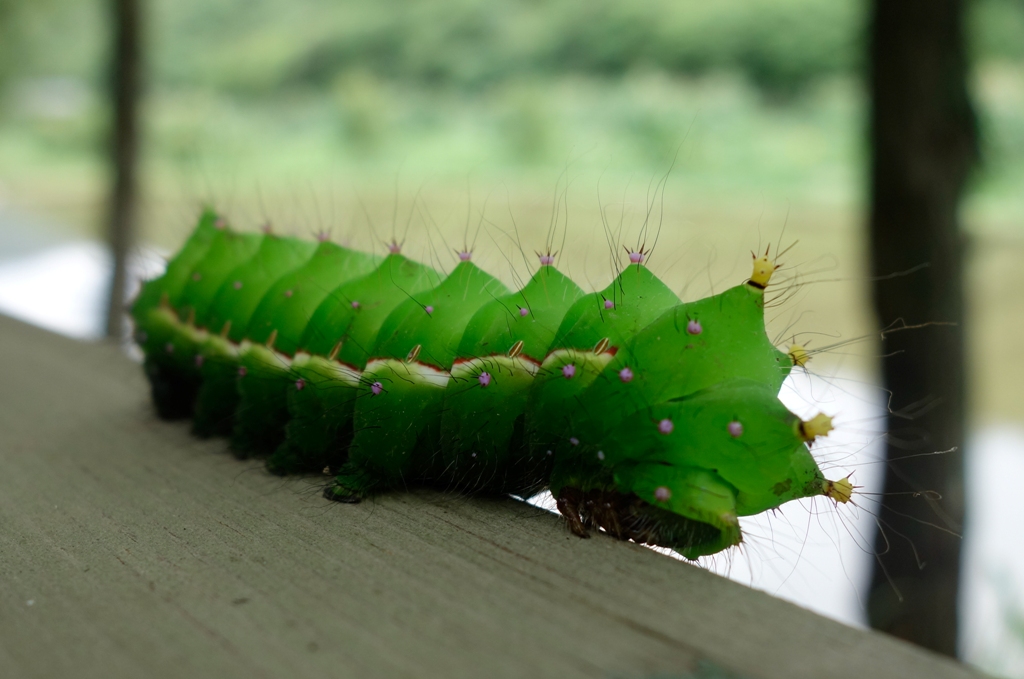
Finally, on the lighter note, here’s my favorite photo of the week … talk about a “Kunming Walking” protocol … 🙂

Caterpillar

Photo by Dad on his own country walk …

Spinal cord surgery (maybe not for the faint of heart)

Standard

It has now been about six weeks since my spinal cord surgery, and I am happy to say that my neck is mending very well.  It’s still a little sore, but I workout my upper body every day with weights and VitaGlide in order to strengthen the muscles surrounding my neck.

So here’s the story of the surgery, with some unusual illustrations courtesy of one of my physical therapists who routinely photographs and videos major surgical procedures in Kunming.

I remember being put in the hospital gown the morning of the surgery and rolling into an ultra modern operating theater that had been designed for Tongren Hospital by Australians.  My anesthesiologist, Professor Wu, who is the recently-retired chairman of the Department of Anesthesiology at Kunming Medical University, taught most of the anesthesiologists at the Peoples Liberation Army Hospital as well as in other major hospitals in Southern China.

Dr. Wu spoke flawless English, and I attempted to have a conversation with him, but I think his mind was focused on other things as he quickly put a mask over my face, and then I was out like a light.

The following photographs were taken by Niu Fang, the physical therapist I mentioned above.

Surgery 6

The surgical team getting ready for surgery

Surgery2

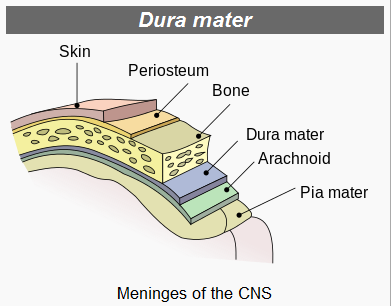
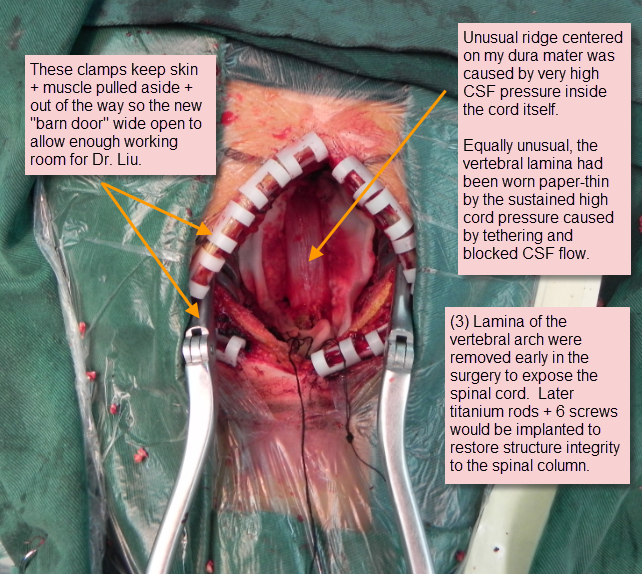
This diagram illustrates the numerous layers surrounding the spinal cord.  Dr. Liu had to drill away the bone of three vertebral lamina (C-5 through C-7) to gain wide “barn door” access to my spinal cord.  Then in order to secure my spinal column at the end of the surgery, Dr. Liu used part of the vertebrae he had cut away, crushed up to make a sort of mortar, to reinforce positioning of the three titanium rods and six screws he used to stabilize my spinal column.

On a side note, my brother Mattias had the nerve to ask Dr. Liu if he could please save a small piece of my vertebrae as a keepsake!

Yes, that is how much I love my brother … how many many sisters would offer a piece of their spinal column as a gift?  🙂

Surgery 3

Before the dura mater is opened … this is the scene

Surgery 1

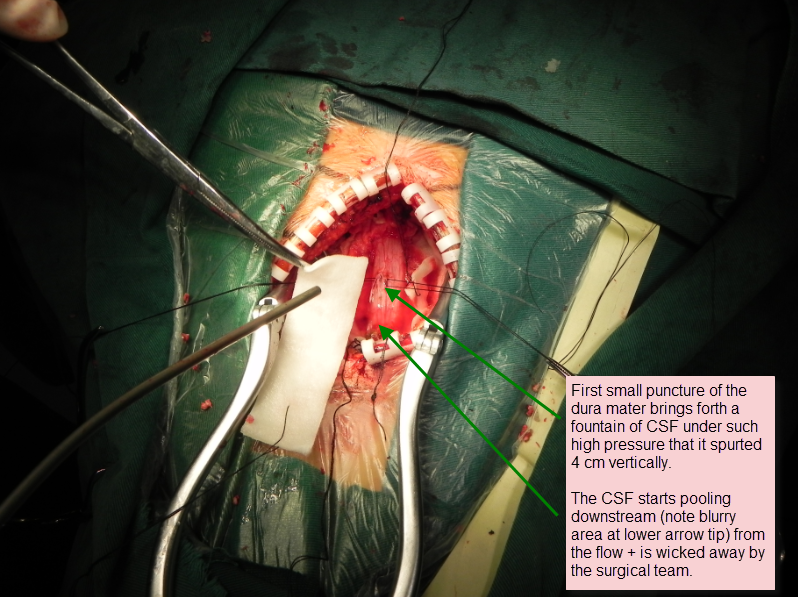
First a small puncture of the dura mater … and then a CSF gusher!

Surgery 4

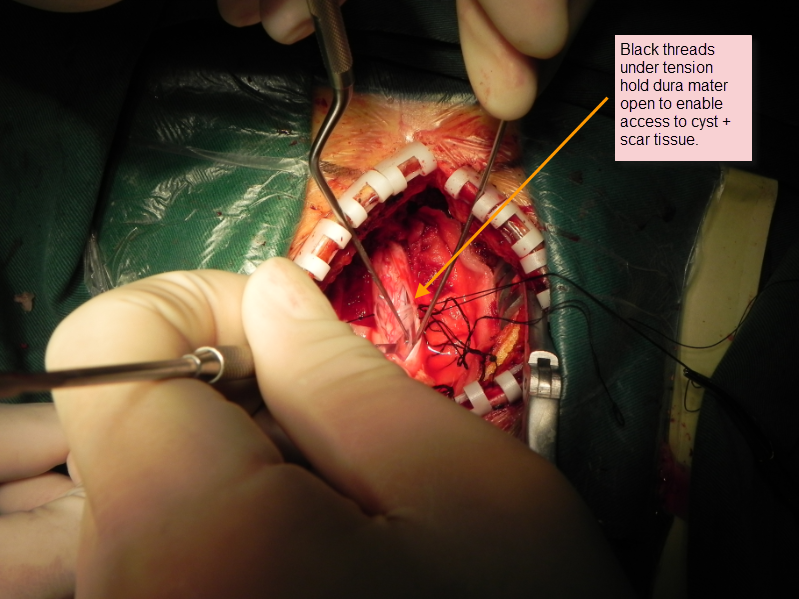
The dura mater is now wide open, exposing the pia mater in order to gain access to the arachnoid cyst on the anterior side of the pia mater, and also revealing 2 small syrinx cysts just inside of the pia mater that were successfully drained.

Surgery5

My surgical team deep in concentration

20130513_193941`

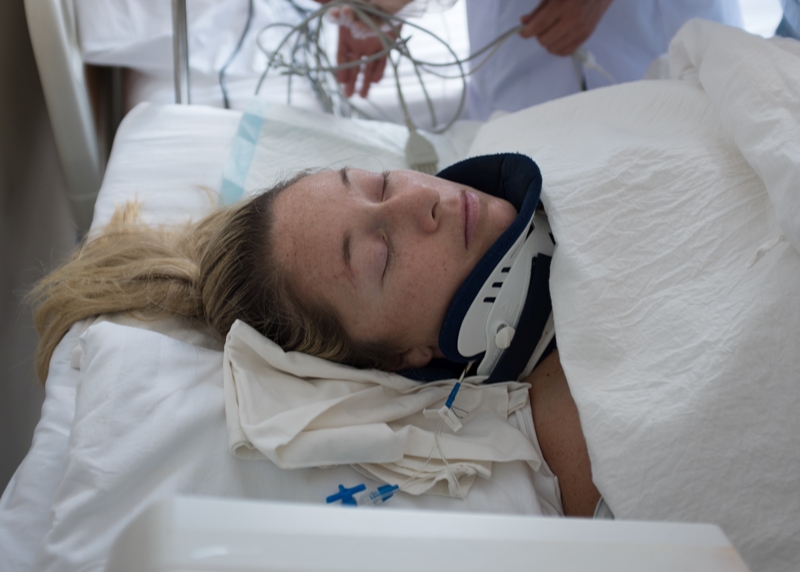
Sleeping peacefully on a lot of drugs right after the surgery 🙂

I have to admit that at first I was hesitant to look at these photos or watch the videos because I thought they might make me a little queasy.   However, I actually found these photo records very informative and wanted to share them with my regular readers.  I doubt many of you have ever before seen the inside of a spinal cord, so here you can have a peek at mine!   (If you’ve any questions about all this please feel free to e-mail me.)

Finally, there were two videos taken during my surgery. I have decided to post these on YouTube because they serve to illustrate a very important outcome of the surgery that could not be seen in a still photograph.

In the first video, note carefully that my spinal cord is not moving at all, being literally stuck in place by scar tissue and wedged in tightly by the big (3.5 cm) cyst.

Also worth observing is the absence of blood.  Dr. Liu is one of the very top neurosurgeons in the world, and his mantra is “no blood” when working on an open spinal cord.   On top of the pia mater you can actually see the tiny, delicate blood vessels that supply the spinal cord, and none of these have been nicked.  I lost virtually no blood during the entire surgery.

In the second video, after the team have surgically drained the big cyst and cleared out the scar tissue, you can actually see that my spinal cord has started beating again in rhythm with my heartbeat.  I learned that your spinal cord is supposed to pulse naturally with your heartbeat and breathing, but mine had unfortunately been frozen in place for over two years.  😦

It is incredible how Niu Fang captured all this on film … see for yourself!

Video 1:  No movement of the spinal cord: http://www.youtube.com/watch?v=w2soHLDNiWY&feature=youtu.be

Video 2:  Spinal cord is again pulsing with the beat of my heart: http://youtu.be/KW2s-eOMcD0

Temporarily Down for the Count

Standard

I apologize I have not updated my blog in the last week. This past week has been a challenging one.  I would also like recognize that I promised my next blog to contain pictures and a detailed description of my surgery. I am presently working on the surgical photographs because I want them to be as detailed as possible for you. So, I promise my next blog post will be very graphic.

As my regular readers will know I injured my right knee about three weeks ago now when I attempted to use the walker for the first time.  Since then I have stayed off my leg until this week as I thought I would at least give standing a try.  I attempted to stand for 30 minute intervals on Tuesday and then twice on Wednesday. Unfortunately, even weight-bearing through standing resulted in a highly dysreflexic response.

For those readers that do not have spinal cord injuries, autonomic dysreflexia is a potentially life-threatening condition that most often occurs in spinal cord injury patients. Autonomic dysreflexia is a reaction of the autonomic nervous system to overstimulation and is characterized by episodic high blood pressure associated with a whole host of symptoms. Some of these symptoms include flush skin, headaches, increased neuropathic pain, and sweating above the level of injury to name a few. Most SCI patients experience dysreflexic episodes differently, but usually have at least one of the following above symptoms. Autonomic dysreflexia is believed to be triggered by afferent stimuli (nerve signals that send messages back to the spinal cord and brain) which originate below the level of the spinal cord lesion.

Neurologically, it is very interesting what is happening to me at the moment.  My right knee is still quite swollen and I have discovered my knee is injured towards the outside of my leg. We came to this conclusion because when we put pressure on a specific spot on my knee my body goes into an involuntary muscle spasm, my neuropathic pain congregates to a specific area on my knee, I get goose bumps all over my body and I start perspiring on one half my face. Most of these reactions are my particular response to autonomic dysreflexia when my body is in pain. What is most interesting is that I could keep touching the same spot on the knee and continue to spasm each and every time I touched that particular spot. This response indicates to me that there may be some sort of neurological response going on.

After my surgery my surgeons told me that my spinal cord was now beating to the pulse of my heart as it was literally stuck in place before due to the multiple cysts in my spine.  With that said, it has only been about six weeks since my spinal surgery, so who knows what is waking up in my body. Only time and hard work will tell.

Needless-to-say it is been a very challenging week with respect to my pain levels, which have been off the charts 😦  Unfortunately, after two days of standing my knee is once again swollen and I am down for the count. I have an MRI scheduled on Monday morning to see if I have done more damage than I’m aware of.

In the meantime, I continue upper body workouts. I am working on strengthening my neck and back muscles, which are getting better, but still pretty sore from the surgery.

Friendly Quad Competition

Standard

As regular readers know, I have been having a lot of severe pain issues since injuring my knee two weeks ago.  This problem continues but seems to be getting gradually better.

Funny, really, to reflect that I’ve just come through very complex, inherently dangerous neurosurgery in fine shape … but in just a few weeks have sustained back-to-back injuries in low tech rehab.  Go figure!  I’ll have to be more careful. 🙂

On the lighter side of rehabilitation, since my knee is still recovering and I am unable to presently stand or walk, I have been concentrating on upper body Occupational Therapy (OT).

Most of the OT in the morning involves building up the strength in the back of my neck “rowing” on the Vita-Glide … then a long routine with wrist weights … balancing exercises, etc.  For the most part this is still pretty hard work as I’m trying to recondition my upper body from having been recovering in bed for the past month.

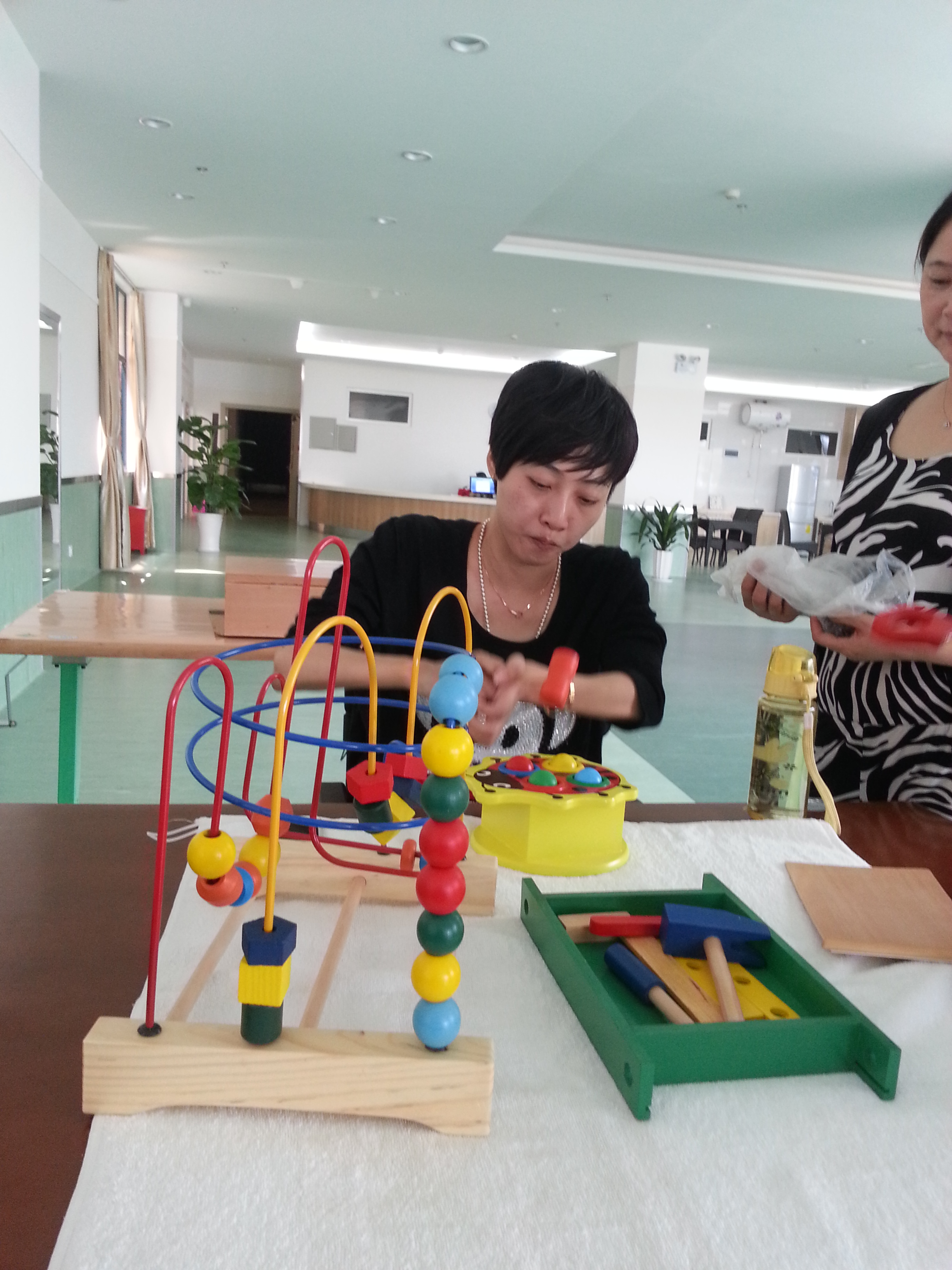
Otherwise, in the brand-new 2nd floor rehabilitation center the staff have just put together a new tournament table to challenge using fine motor skills with your hands.  This may not be exactly the most appropriate table for me, since I do not have any particular motor function in my hands, but it does allow me to work on my adaptive hand behavior.

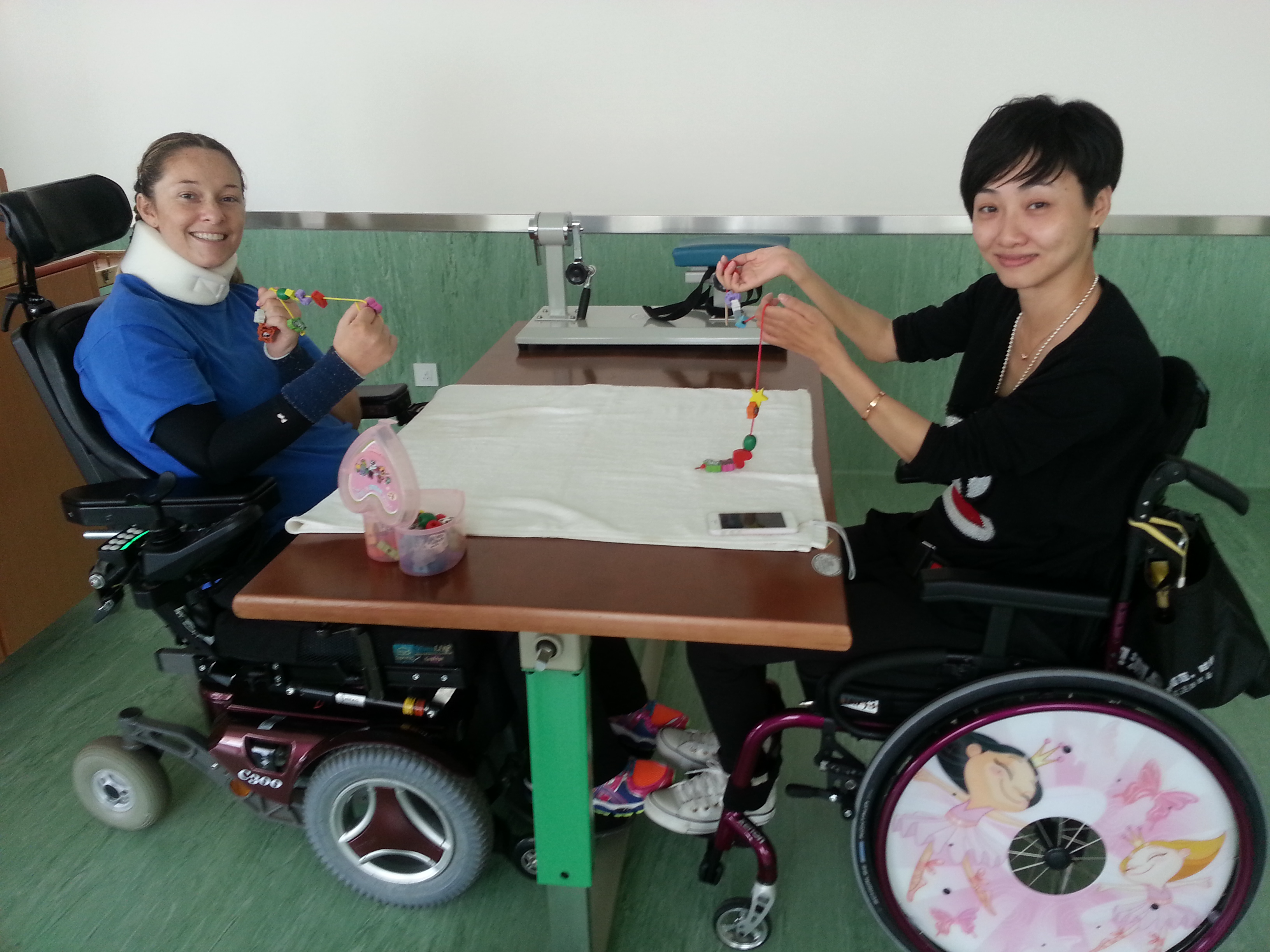
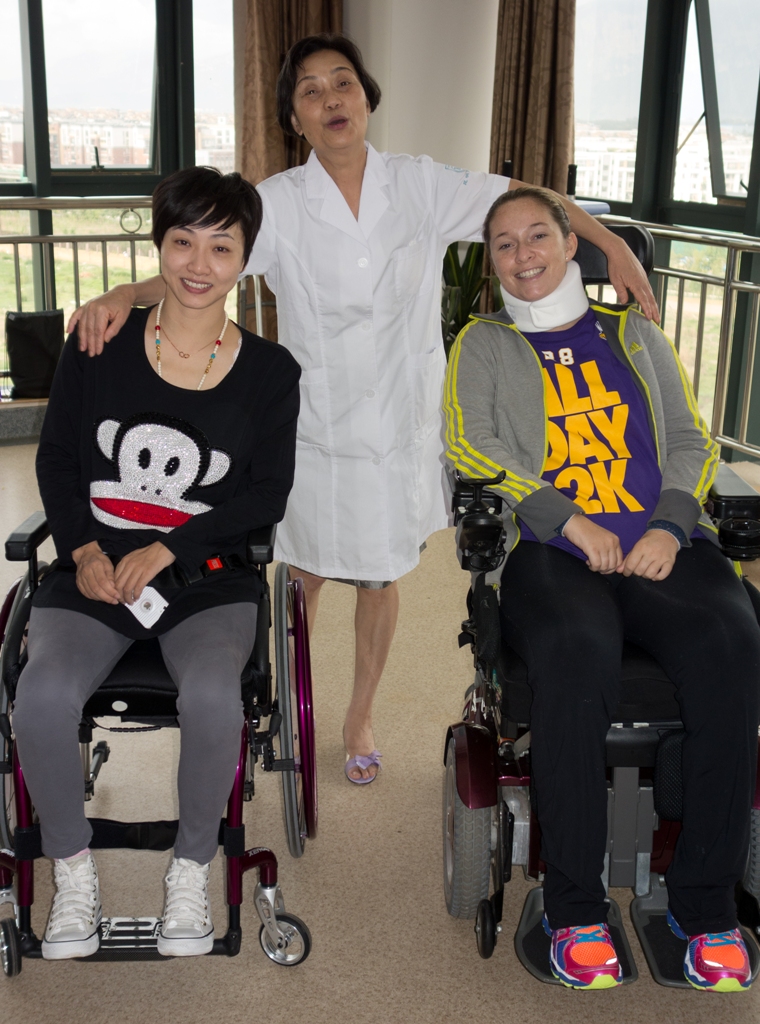
Anyway, today my pal Nu Jia and I had a little downtime, and we so decided have a competition at the OT table.  It was a fair match, as Nu Jia has exactly the same level of injury as myself … C6 … so her hands and triceps are just as impaired as my own.

We chose a game with a long thick string connected to a small wooden needlepoint. The point of the game is to thread differently shaped blocks onto the string.  Now try to imagine a quad picking up a needle, even a thick wooden needle, and with it trying to weave a necklace … or maybe think of trying to push wet string.

Nu Jia and I squared off to see who could get 10 wooden objects threaded through the needle in shortest time. The entire rehabilitation team gathered around and started to cheer us on. Both of our hands were literally shaking as we strained to get these darn little wooden objects onto the needle.  The competition was fierce, but I’m afraid that in the end Nu Jia won fair and square … actually, she won by a landslide. I might like to say that’s because she’s been practicing and I’ve never done this before, but truth is she’s just really good 🙂

Nu Jia proudly showing her winning necklace

“To the victor the spoils” …  Nu Jia’s winning necklace!

Nu Jia Hard at work 

Nu Jia Hard at “work” …

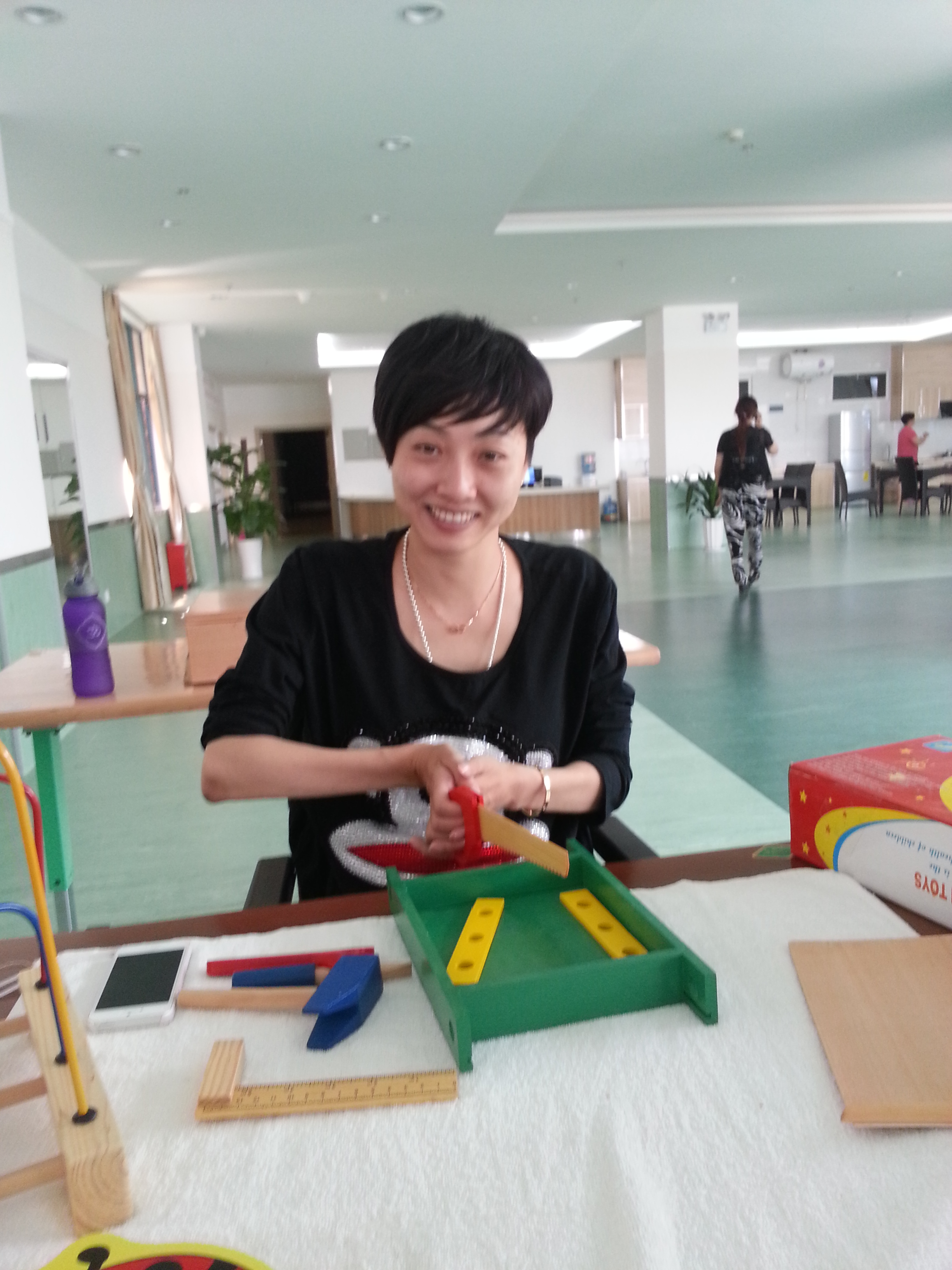
Nu Jia just won't quit :-) 

Ever see a prettier carpenter?


We’ve decided now to have a weekly competition, and the staff just posted a scorecard up on the bulletin board, so this is getting serious. I think friendly competitions like this are a good idea, as it will help keep the atmosphere here both fun and intense at the same time.

All in all a pretty good day despite the fact that my knee is still swollen, which results in Dysreflexia that, in turn, triggers severe neuropathic pain, usually in the evenings just in time to wreck a night’s sleep.  I probably have another few days of this before I can actually re-join the walking program again.

Finally, I would just like to prepare my regular readers for an upcoming blog post as it will not be for the faint of heart … I will be posting high resolution photographs of my spinal surgery.  These photographs are exceptionally informative but are necessarily quite graphic.

New rooms for international SCI patients

Standard

I am still recuperating here at my apartment in Kunming.  My injured knee seems to be a little better each day, but in the evenings the neuropathic pain is still a lot to contend with.  Unfortunately, my brother Colin just told me that my knee may take more than a month to really heal properly.

Anyway, today I  just remembered that last week I promised to post photos of the new rooms now ready for international SCI patients coming to the Tongren Hospital.

The idea behind these new rooms is as follows.

International SCI patients can choose to live “off campus” in an attractive new apartment complex located across the street and within easy (10 minute) wheelchair commute from the hospital.  This is how I am set up.

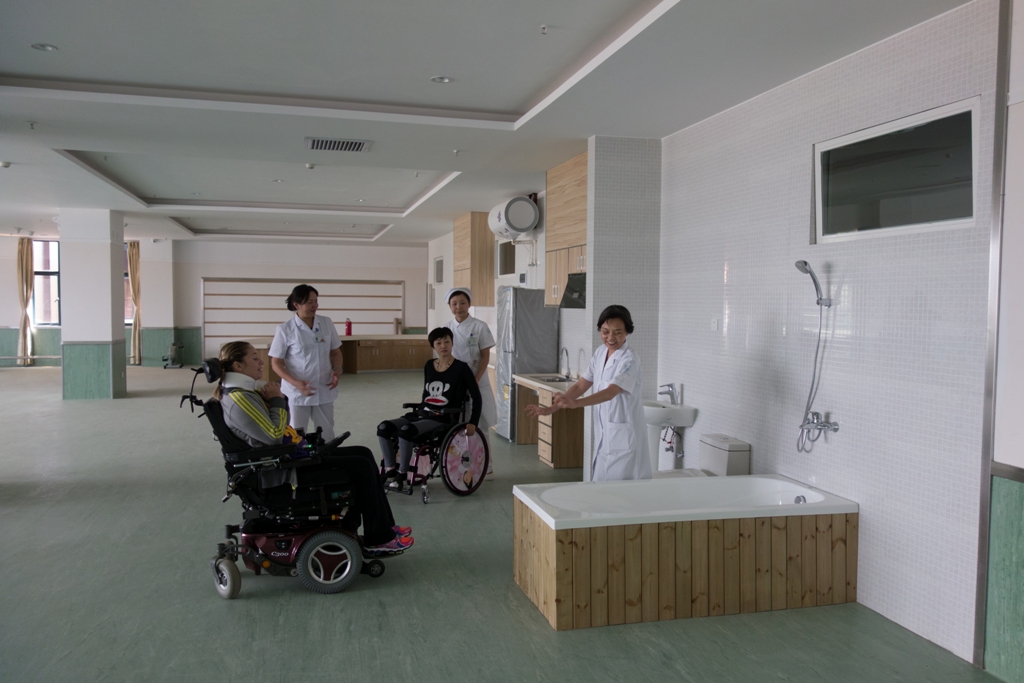
The alternative is to live right inside the hospital, which is what some other program participants do.  Presently, living in the hospital means taking a very nice twin-bedded private room on the 7th floor, which offers 24-hour nursing care and is run pretty much like a modern private hospital ward elsewhere  in the world.

Now that rehab operations have been relocated to the spacious new 2nd floor centre, the next development phase is to offer international SCI patients residential accommodation on a turn-key (everything included) basis on the recently-renovated top floor of the hospital overlooking the Himalayan foothills.

The concept is to offer international SCI patients an opportunty to get right to work on rehab and save the time and expense of setting up a private residence in China.  In my case, my sister Tiffany was our “advance man” and came over here in early January to secure an apartment and get it fitted out for me.  With some assistance from long-term expats living here, getting an apartment up and running is not too hard, but not being rushed at the beginning is definitely an advantage and will both reduce cost as well as get a better end result.

So Tongren’s new offer to international SCI program participants is to live inside the hospital on a month-to-month basis in a residence-like environment on the top floor.  And then if an individual wishes later to rent a private apartment across the street, this can be arranged without rush or waste.

The 8th floor of the hospital has therefore been designed with this idea in mind and should appeal to individuals who wish to come here on their own and get right into the rehab program without having to set up their own household right away.

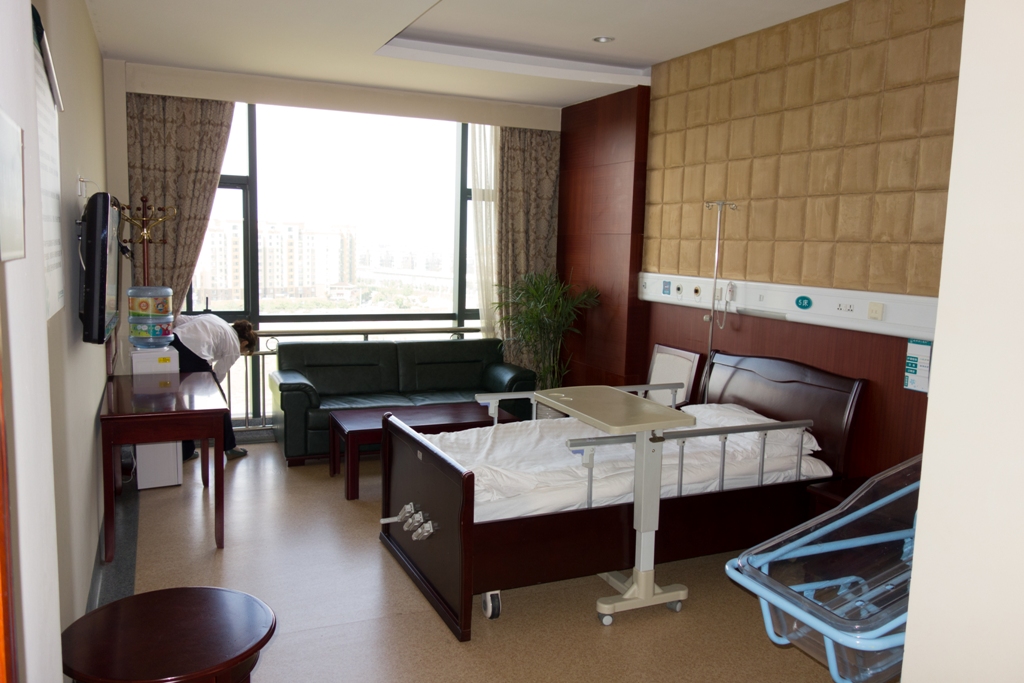
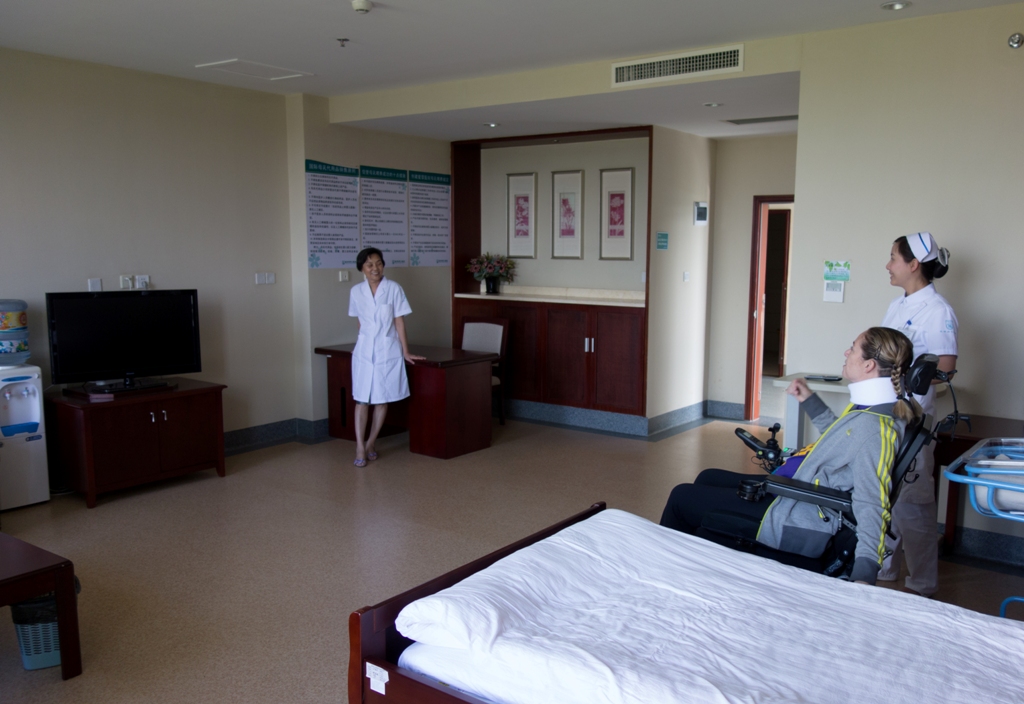
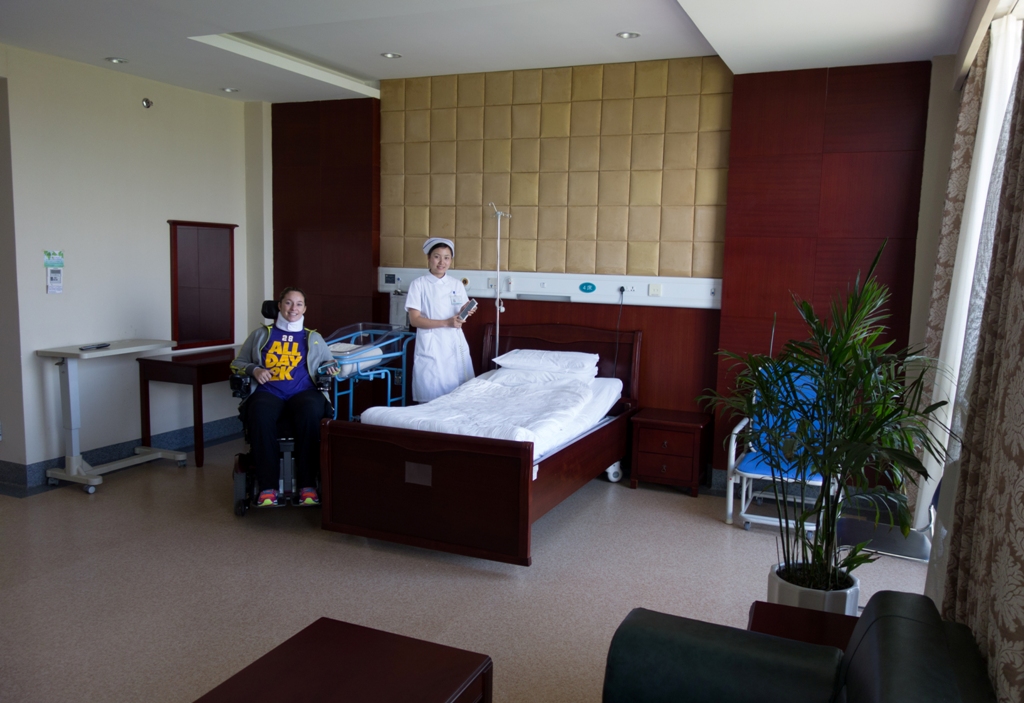
There are 14 large rooms or suites on the 8th floor, each with ensuite bathroom with wheelchair accessible shower.  Of these, 11 are so-called “Standard VIP” rooms + one is an over-sized  “Studio” room + there are two large “Suites” that comprise separate bedroom and living room.

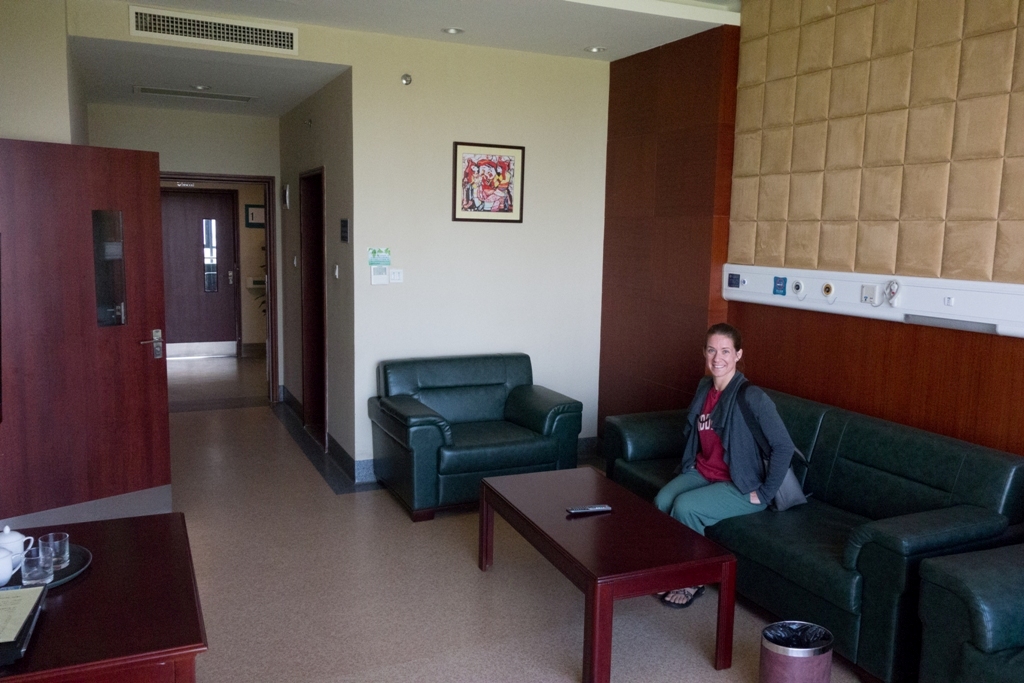
These rooms were originally intended for VIP Chinese patients, so they’re very nice … hospital beds hidden inside wooden frames, green leather upholstery, wall-mounted flat screen TVs in every room, maid service, etc.

Here are some photos.

8th Floor Entrance

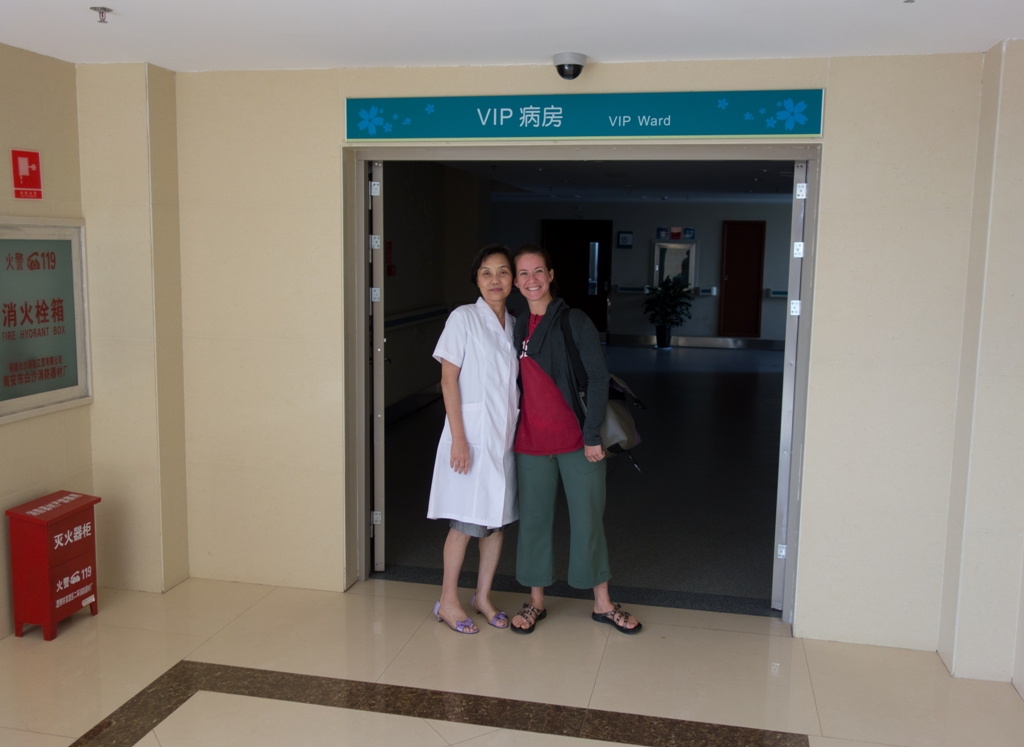
My sister Tiffany + Dr. Zhu at 8th floor entrance

Entrance Hallway

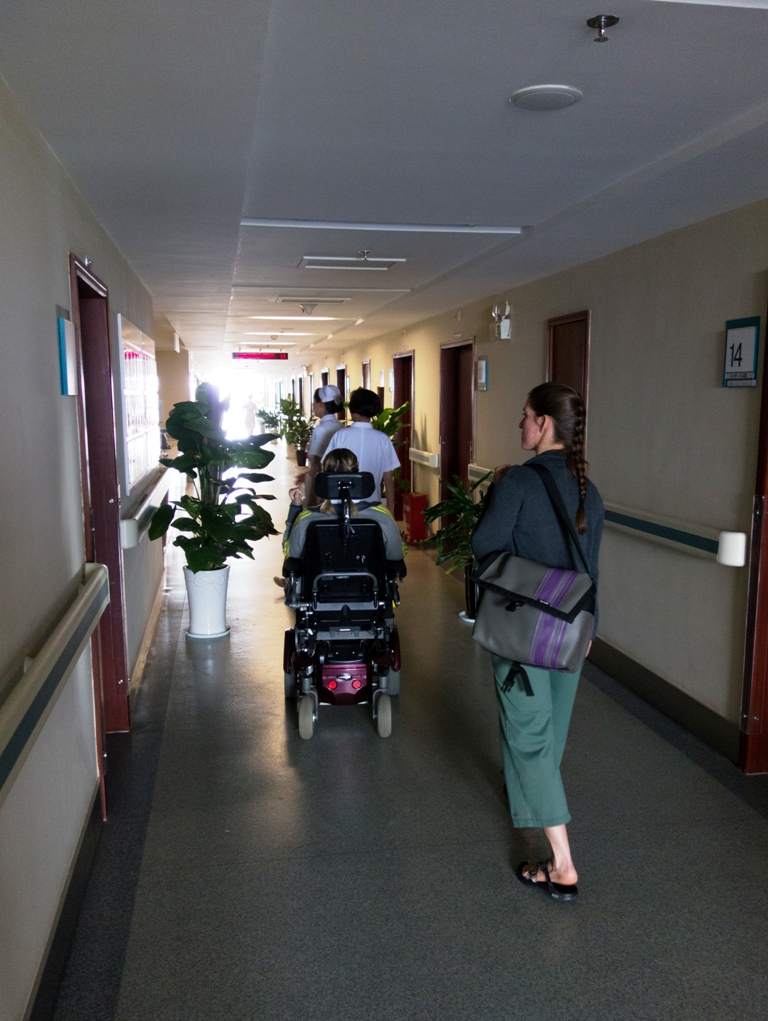
Wide, sunny corridors on top floor

Smallest Room

“Standard VIP” room (maid service included)

Mid-Size Room

Spacious “Studio” with desk + work area

Mid-Size Room (2)

“Studio” viewed from living area corner

Suite Living Room

Sister Tiffany in the “Suite” living room

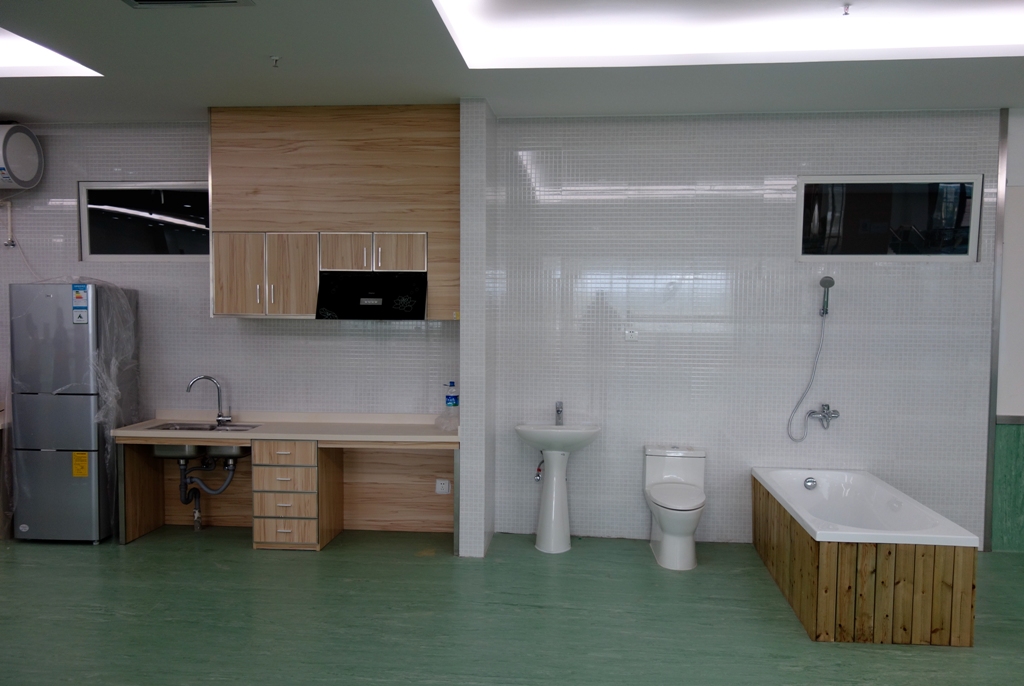
Also located on the new 8th floor is a kitchen where residents can choose to prepare their own meals if they don’t like the hospital cafeteria food, and there is also a general purpose recreational room for movies, reading, games and general social activities.

24-hour nursing care and a full range of hospital medical resources are obviously also available, as required.

Injured on the job …

Standard

Sorry to have been off-line for a few days, as I injured myself Friday and had to spend all weekend in bed recovering.

😦

Here’s what happened.

Last week was my first since surgery back on the job at rehab, which started off on Tuesday with standing balance practice.  On Tuesday I managed to stand for a full 2 minutes in one go without passing out, and by Friday I managed to stand for 20 minutes in one go.  Each day I’d been getting up and down more than half a dozen times, which is really exhausting in this early phase.

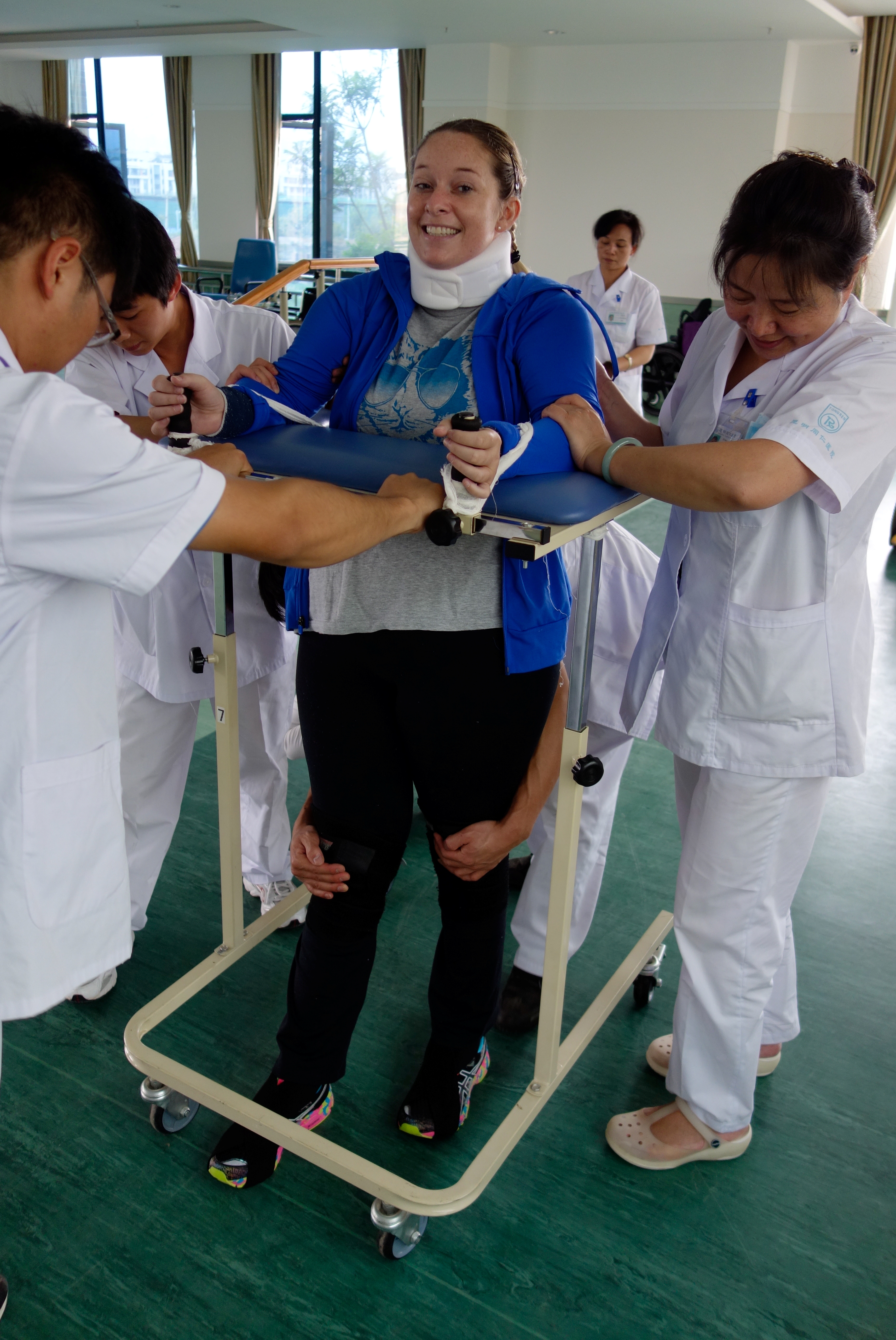
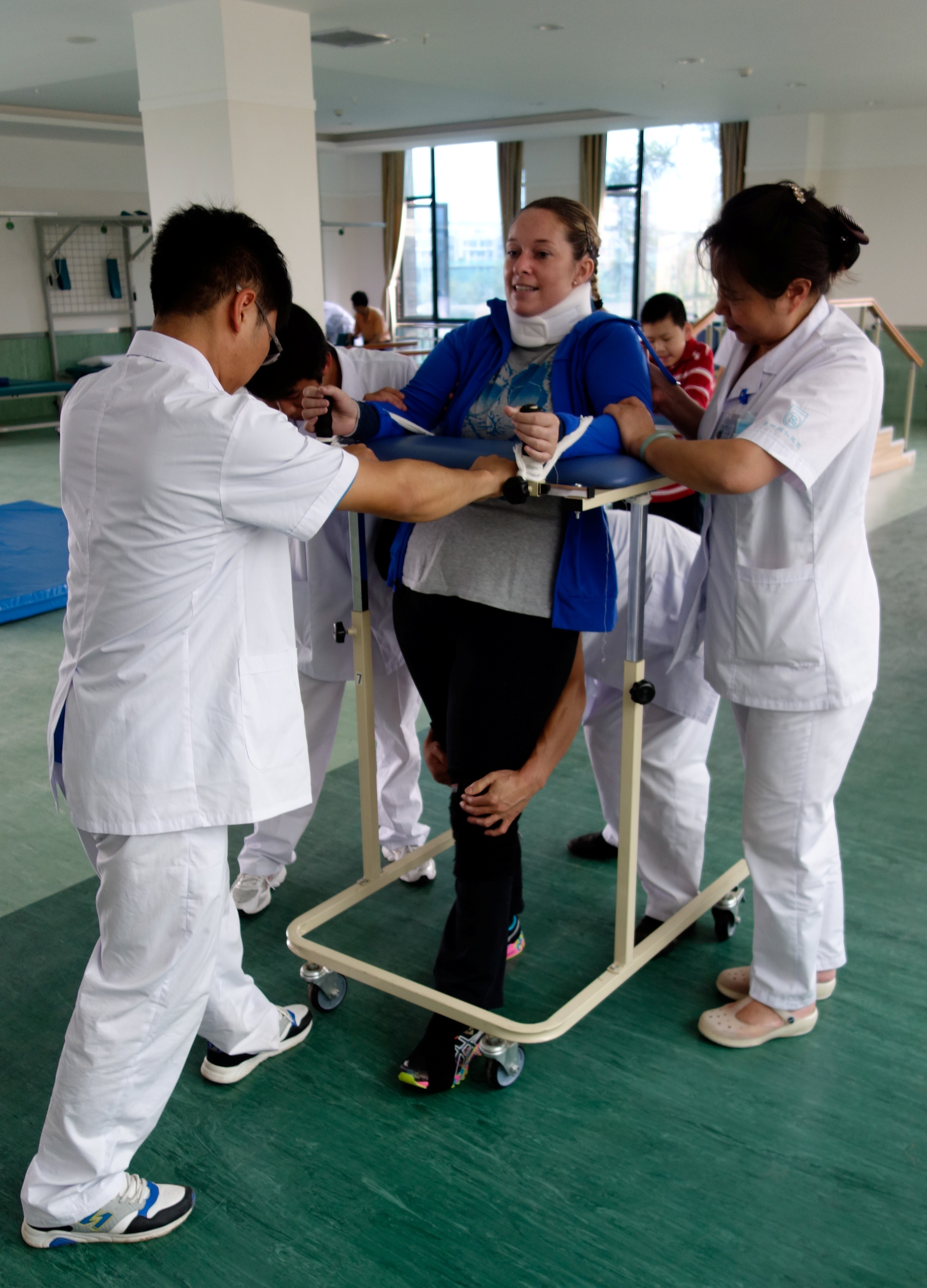
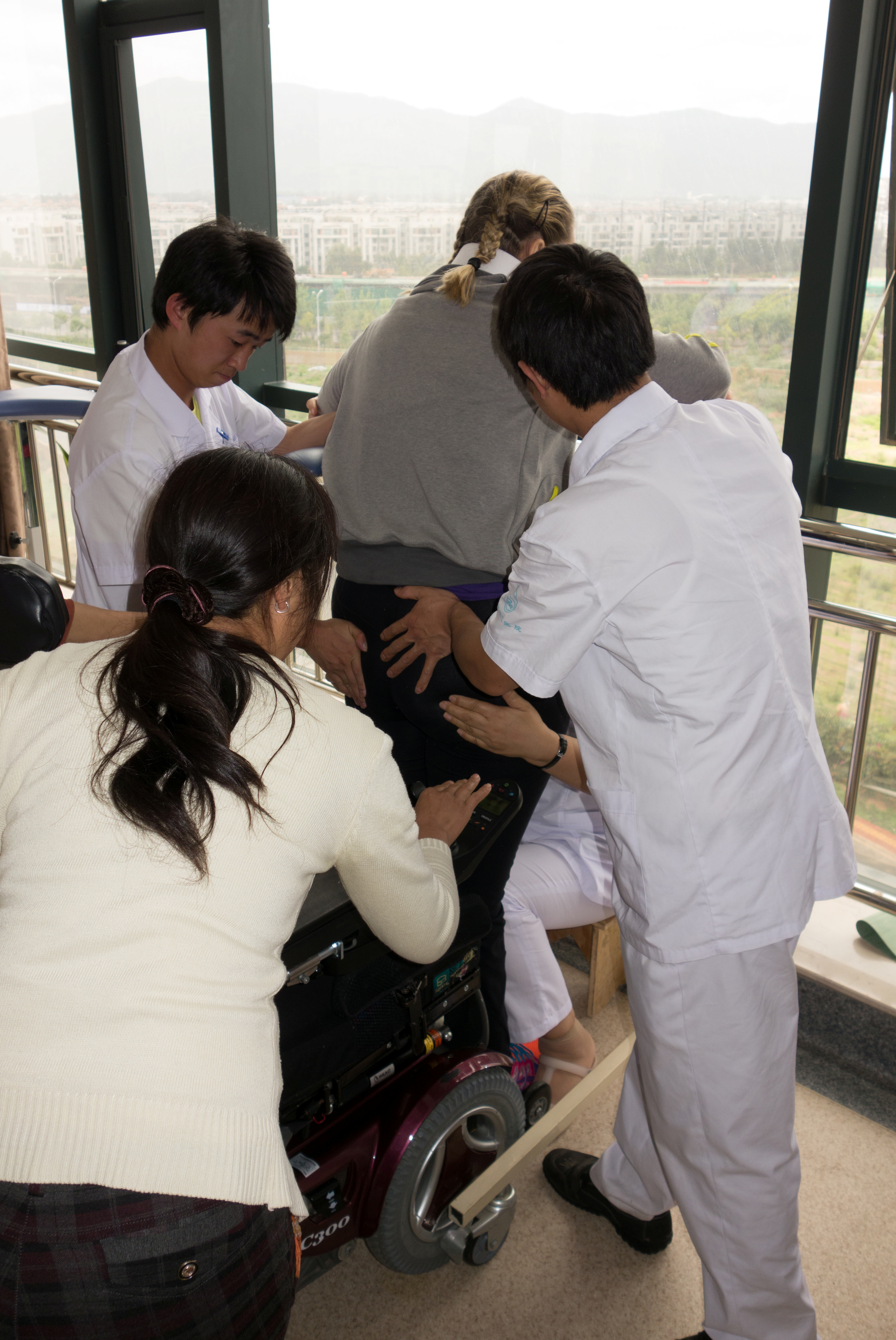
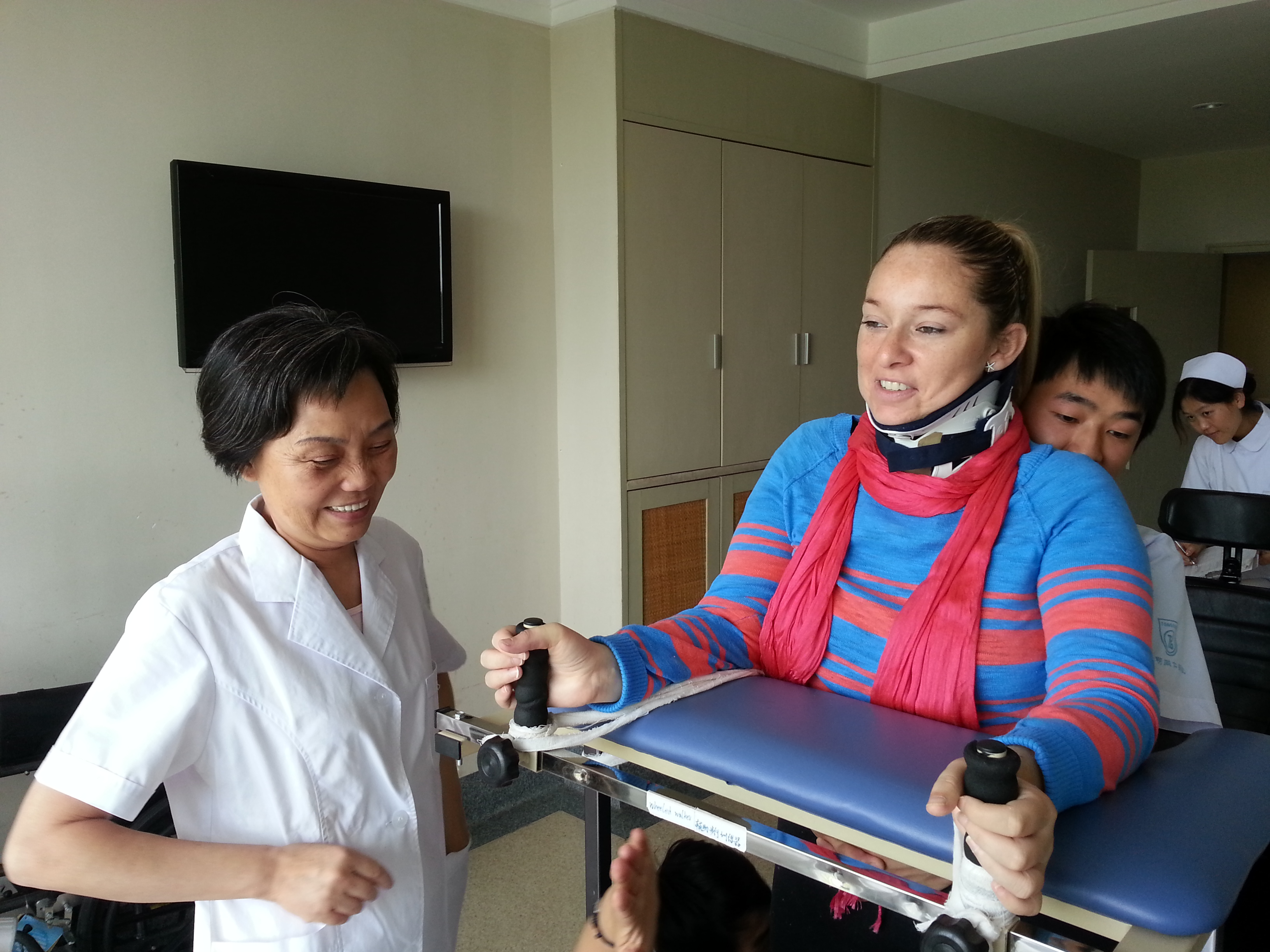
So … on Friday Dr. Zhu interpreted my improved standing performance as my being ready to attempt the walking protocol, which required no less than 4 therapists to assist me —  2 to hold up my upper body and 2 to handle my legs, as I am paralyszed from the chest down.

Walking 5

Ready to go …

Walking 4

On my way … first walk

Walking 2

Wow … harder than it looks!

Here’s a link to a video my sister Tiffany made of my Friday performance …

http://www.youtube.com/watch?v=LvxxVDzaBvk&feature=youtube_gdata

Unfortunately, on one step a therapist working from behind pushed my right leg forward, but the rubber toe of my sports shoe stuck on the floor (at least as near as I can work out) and as a result my right leg buckled inward, seriously twisting my knee and ankle.  Remember, I’m bearing 100% of my own weight.

My initial response was quite peculiar.  For the past 2 years since injury, I have not perspired either above or below my C-6 level injury.  As some readers will know, it is unusal for a SCI survivor not to be able to perspire at least above the level of injury.

In the instant I twisted my knee, however, I immediately started perspiring on my nose and forehead in addition to having goosebumps all over, which is my body’s ususal reponse to a Dysreflexia episode.

This all happened so quickly that I was unaware initially that I had injured my leg.  Only when I returned to my apartment that afternoon did I realise that I could feel something was seriously wrong due to an explosion of neuropthic pain and also that I could no longer sit up in my wheelchair without passing out.

How’s that for another odd response?  Dysreflexia ususally drives blood pressure higher, very much higher, but here I was passing out from low blood pressure for the first time in over 2 years.

The weekend was living hell, as my ankle and leg swoll up and my blood pressure oscillated crazily.  I passed out dozens of times on Saturday, and severity of the neuroapthic pain defied description.

Dr. Zhu and my neurosurgeon, Dr. Liu, both came to the house to visit me on Saturday, and Dr. Zhu explained that twisted knees and ankles are not uncommon in the beginning due to the fact that knees and ankles unused for years are weak.  The core message seemed to be that a few days of bed rest would enable me to try again … Tough love!

??????????????????????

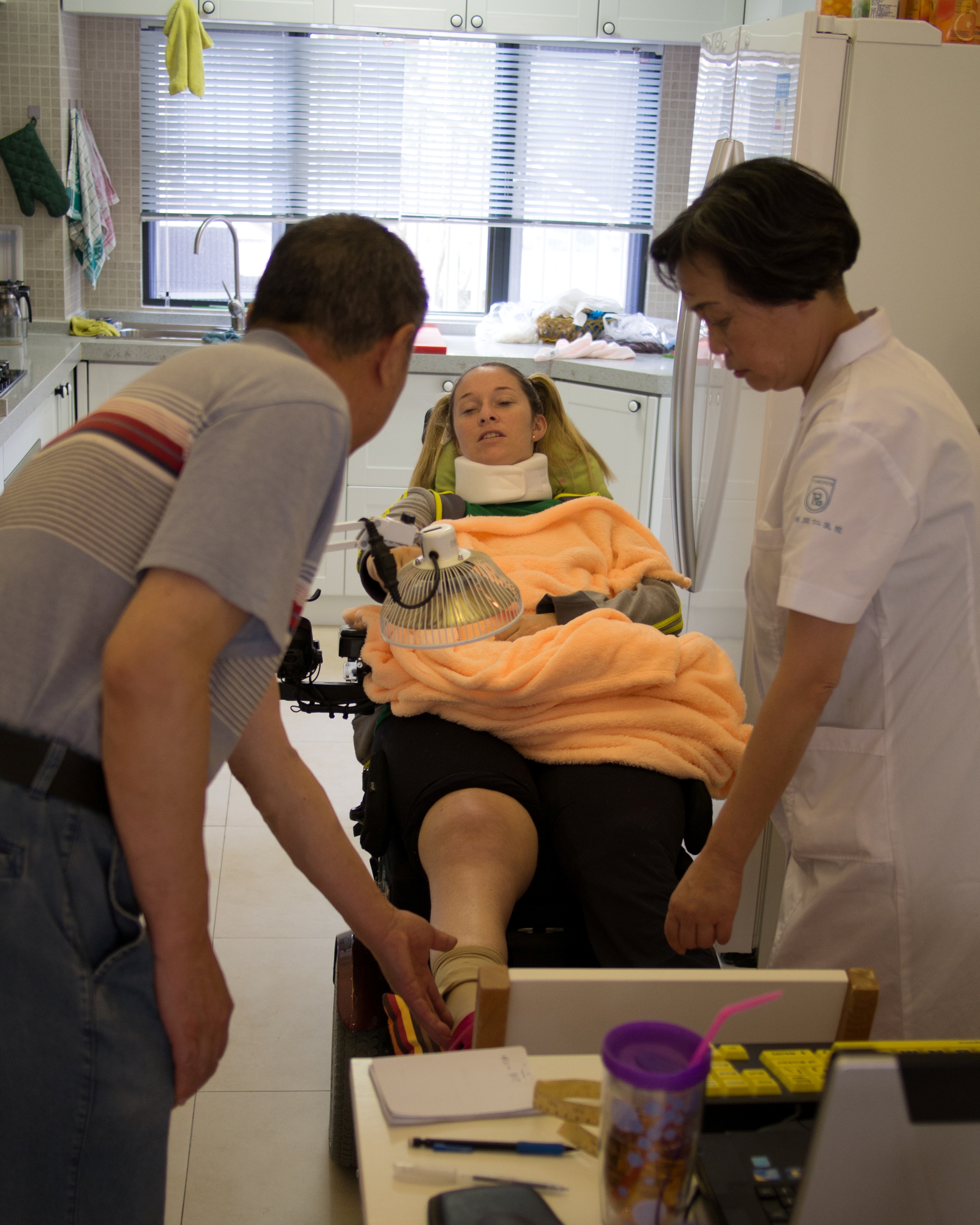
Dr. Liu + Dr. Zhu visit me + even bring a heat lamp!

My particular challenge is that my baseline neuropathic pain has not subsided since before surgery, or at least it seems that way, but I’m really not sure yet because inflammatory pain from surgery has not yet completely abated.  Anyway, given my still-high baseline meuropathic pain level, the twisted knee and ankle sent pain through the roof.  Combined with the unstable blood pressure, I’ve been unable to focus on anything, let alone a computer screen, nor have I been able to sleep without resorting to benzodiazapine drugs … uggh!

In short, since Friday afternoon I’ve been a mess!

Presently here in China we’re in the middle of a 3-day national holiday, so I’m off-duty recuperating.

Meanwhile, my sister Tiffany was here visiting for the week and has been a HUGE help to me.  She came all the way from her home in Raleigh, North Carolina via Los Angeles and Hong Kong.

??????????????????????

Really happy for Tiffany’s visit

Sadly she had to leave yesterday, as she is running a yoga retreat this summer.

A surprise party!

Standard

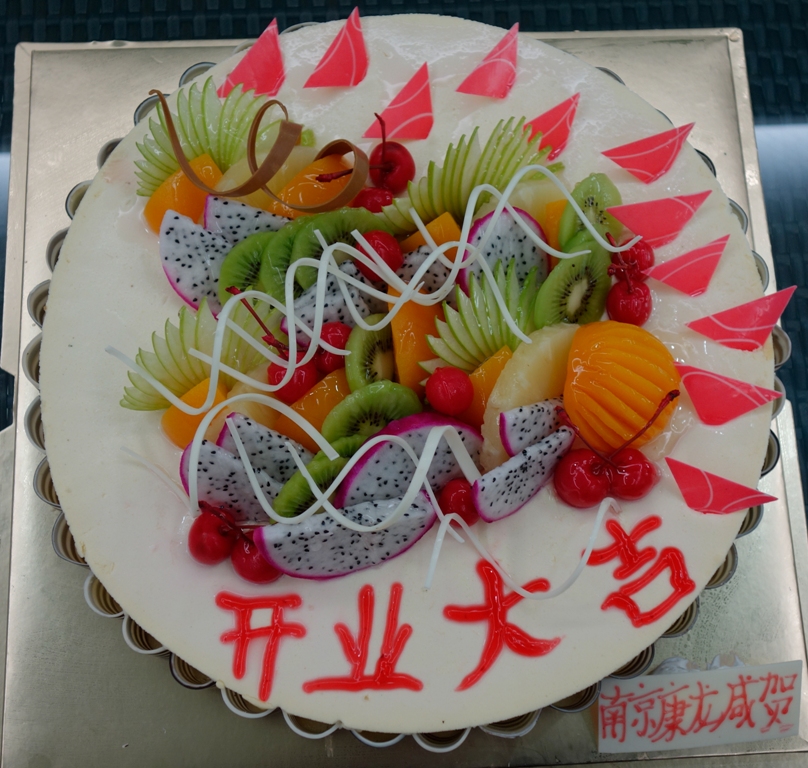
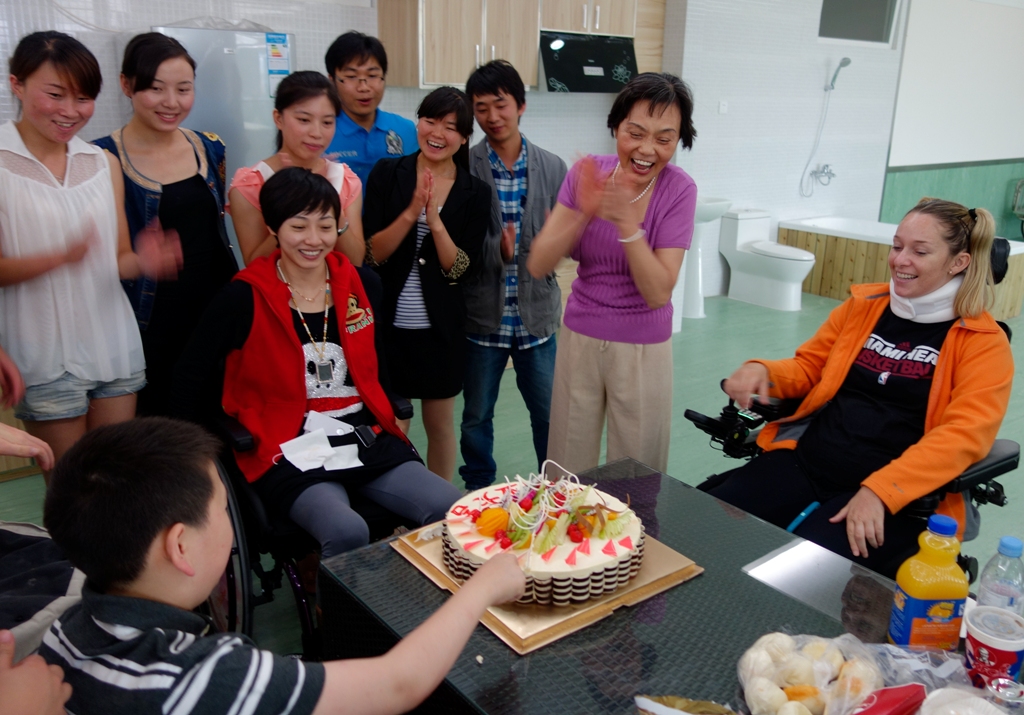
CakeParty time!

Wow!  Talk about surprise parties!

Regular readers will recall my Tuesday post in which I included photos taken during Nu Jia’s and my tour of the brand new, almost-finished 2nd floor rehab center .  During the tour, we were told the new facility would be open by the end of the month, and indeed workmen were still busy all around us.

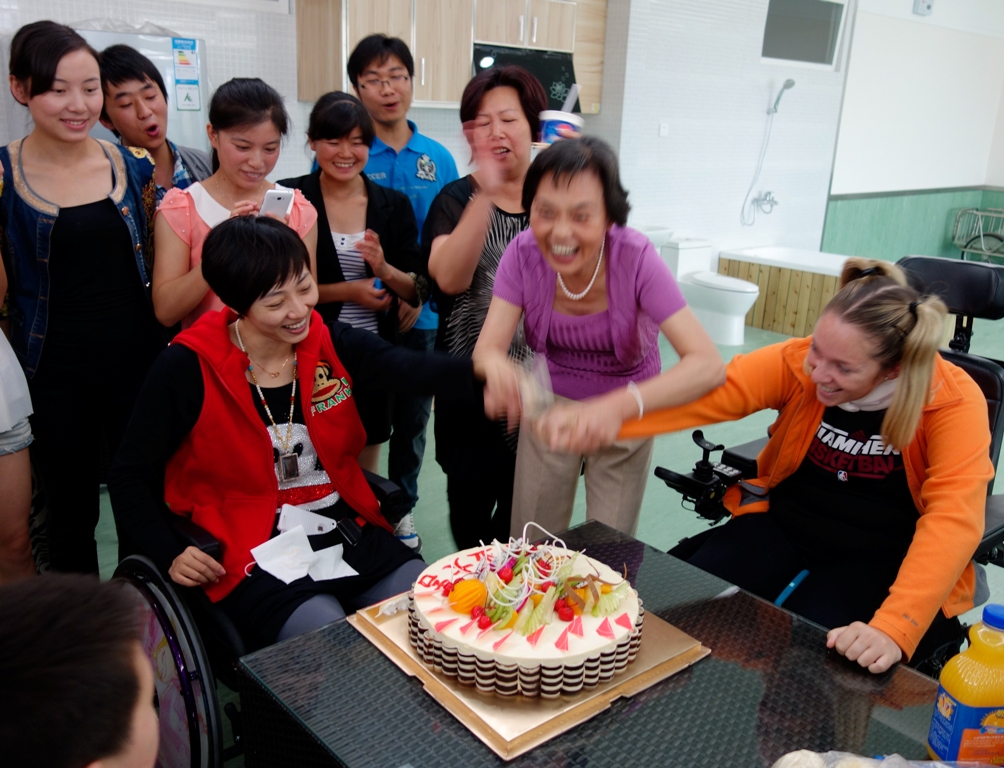
Well, this is China!  Things can happen here really fast when there’s firm leadership, and today’s events sure proved the point.  For this morning we were asked by our commander-in-chief, Dr. Zhu Hui,  to report for duty on the 2nd floor, where we not only discovered our new rehab center broom-clean but also that tables were being set up for a lunchtime party.

🙂

Welcoming Toast

Welcoming toast by Dr. Zhu

First Cut

First cut by Nu Jia, Dr. Zhu and myself.

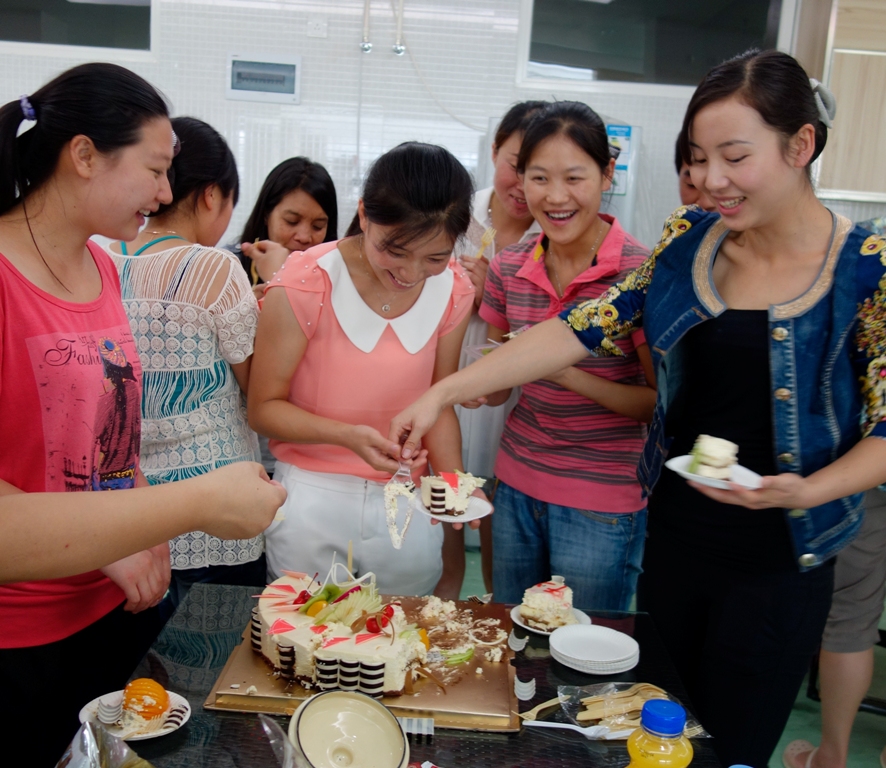
Second cut

Solo cut by Kelvin (who’s here from Canada)

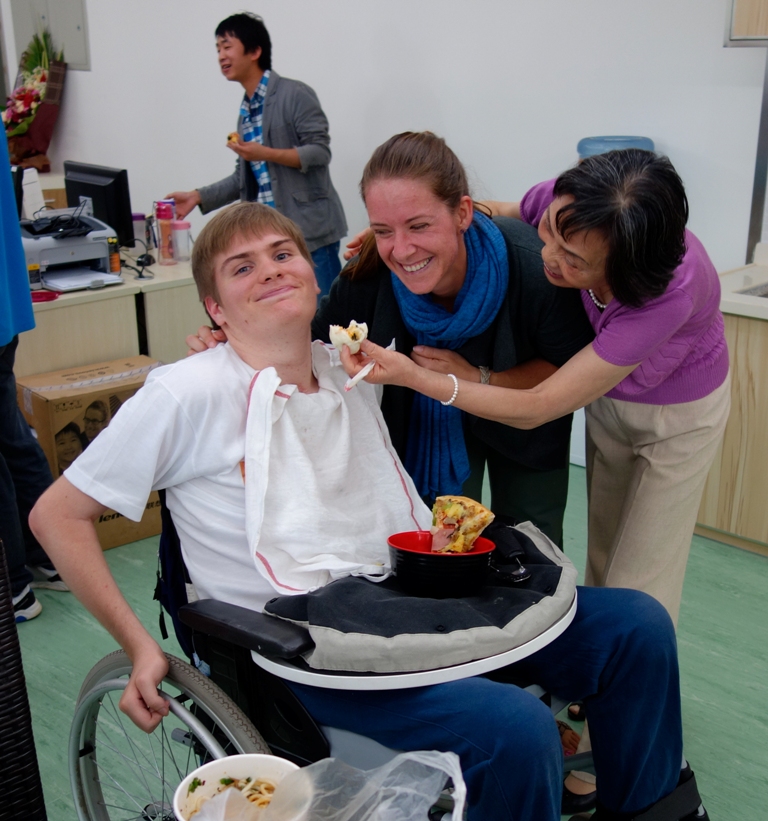
Save me from these women!

Not having it … David prefers pizza!

Off-duty nurses

Off-duty nurses having a ball …

Of course, it wasn’t all play today … we come here to work, too!  This is Day 23 since my surgery, and I am feeling more confident as I am able to hold better posture and learn to balance while bearing 100% of my own weight. Even Joseph Pilates might have admired my “core” progress!

Squared shoulders

Square those shoulders!

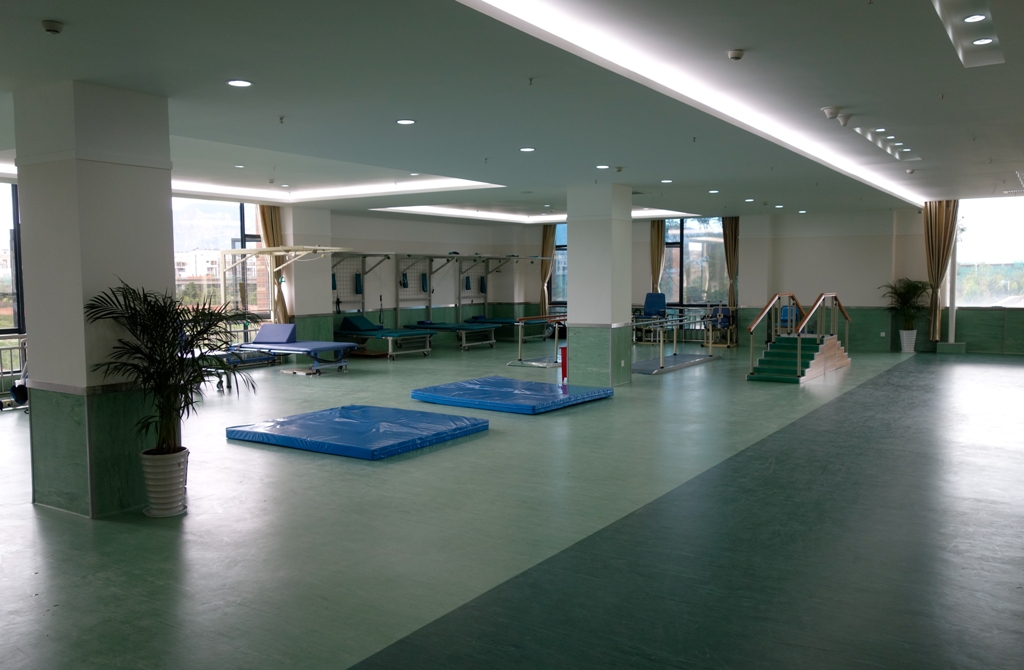
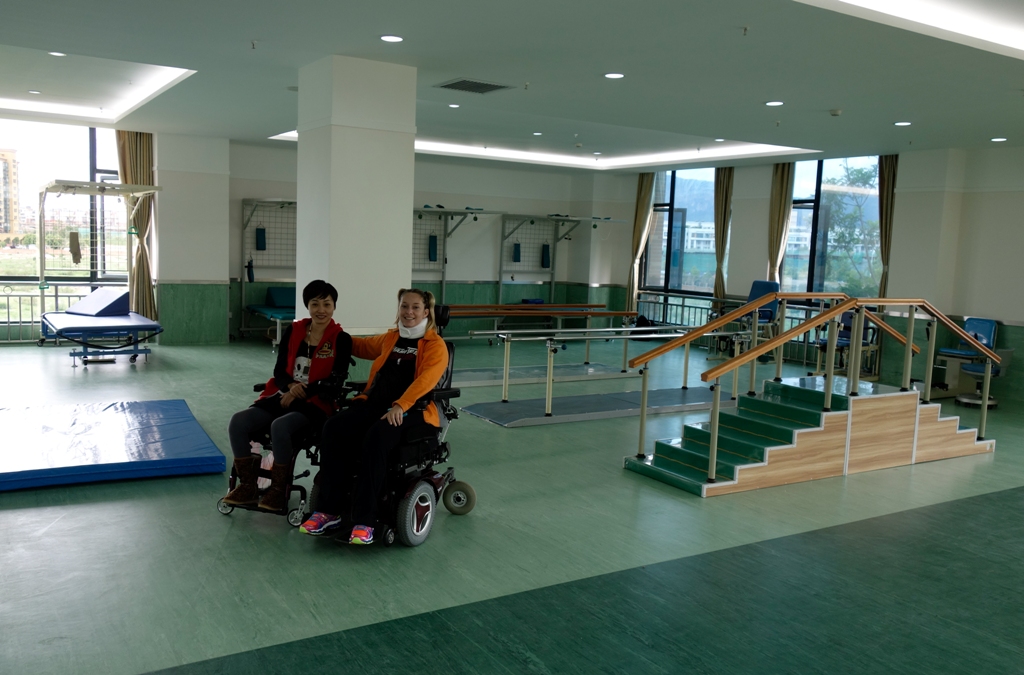
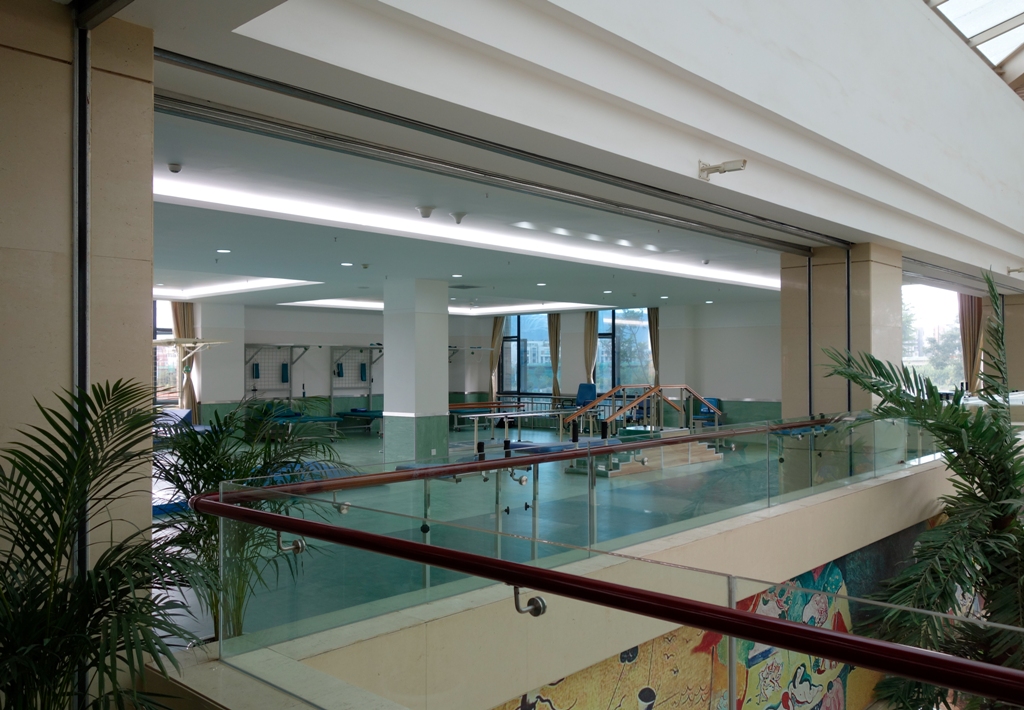
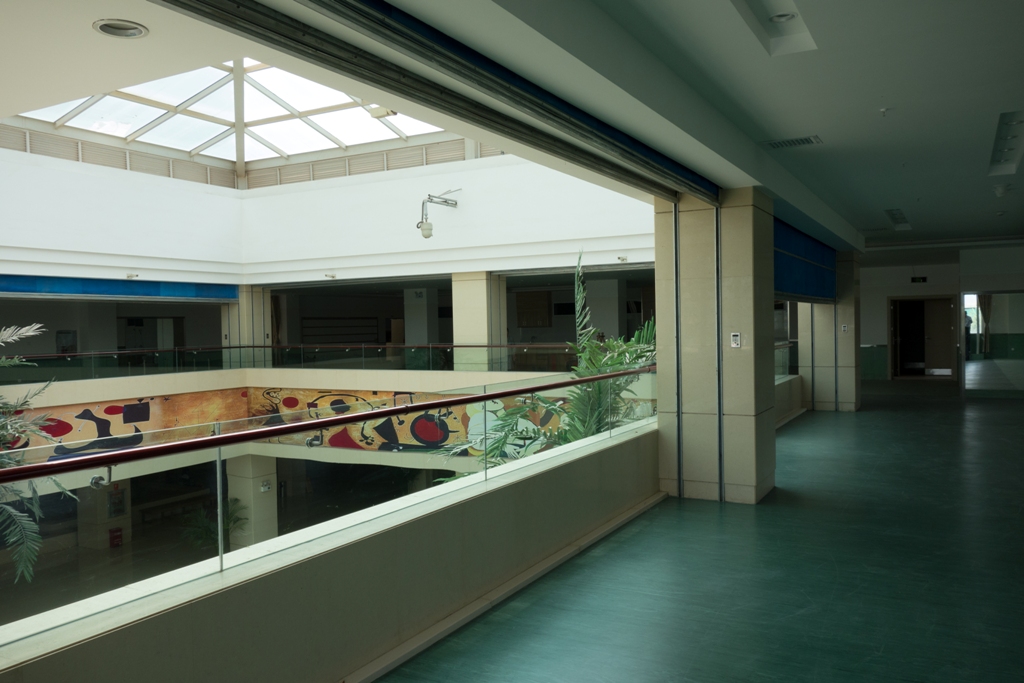
And finally, here are some more photos of our cleverly designed new center.  It’s sort of challenging to describe, as it is built on the 2nd floor around a ground level atrium and covered with a huge skylight dome.  Modern China is full of brilliant architecture, such as the brand new Kunming International Airport.  So I feel we’re pretty lucky to be able to make good use of such an open and cheerful space.

Brand new everything 2

Brand new everything + so MUCH space!

Brand new everything

One day Nu Jia and I hope to use those steps

OT Corner

Here’s OT corner …

Almost outdoors

Lots of light = lots of happy indoor plants!

Looking ahead, in my next post I’ll publish some photos of the brand new 8th floor rooms that are now available for international patients who prefer to live on the hospital grounds rather than rent an apartment across the street as I did.  Both work fine, but the new rooms are REALLY nice and offer newcomers a turn-key solution.  Just get to the Kunming International Airport from Hong Kong, Shanghai, Guangzhou or Beijing (or even direct from Seoul, Korea, as I did in March) and a wheelchair-accessible London Taxi can bring you straight to the Tongren Hospital.
Day 21 … back on the job!

Standard

Today (Tuesday in China) is the 21st day since my spinal cord surgery, and I reported back for rehab duty to Kunming SCI program director, Dr. Zhu Hui.

Regular readers will recall that last Wednesday I made a pre-mature attempt to rejoin rehab and that the effort was too much for me, being just 2 weeks out of the operating room.  So I went to bed Wednesday evening and didn’t get back into my chair until this morning.

This was my Dad’s idea of house arrest … that is, to give me five full days of old-fashioned bed rest at home to heal.  This seems to have worked out as he and I hoped it would, because today’s relaunch went very well.

830 Warm Up

8:30 musical warm-up with sister Tiffany + Team Kunming

Up ...

Okay … here we go …

Up, Up ...

 Up, up … and …

... and away

Way up I go …

Solo

 Dizzying solo flight!

Turns out “21” may be the magic number here in Kunming for recovery from major spinal cord surgery, as my good friend Nu Jia was operated on Feb 16th last year (2012) and started rehab exactly 21 days later.  She has made amazing progress since then, even regaining bladder control, which is all the more remarkable considering her auto-accident injury nearly severed her cord and her 2012 surgery with Dr. Liu here in Kunming came fully a year after her original spinal fusion in Hainan Island.

Zhu Hui Pets

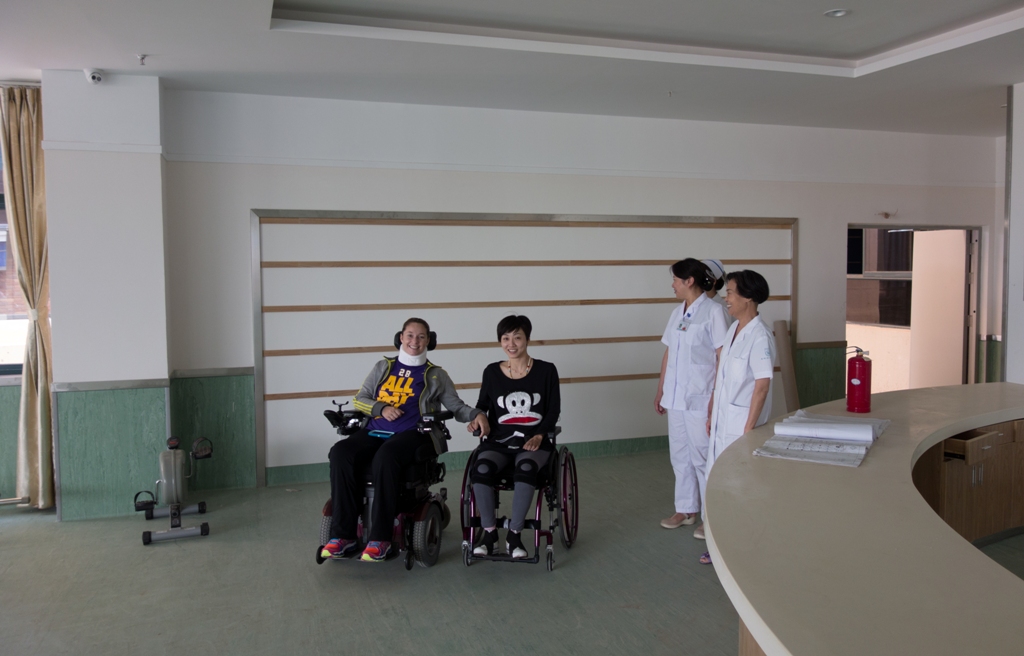
Nu Jia … Dr. Zhu Hui … and Newbie Ali

Here’s the background on why Dr. Zhu pushes so hard to get new surgery patients standing, bearing 100% of their body weight, as soon as possible.

The soles of our feet are particularly dense with sensory nerves that feed back through the spinal cord to the brain.  This distal signaling thus completes a lengthy feedback circuit, and the sooner patients apply full pressure to their feet the better and faster they seem to recover.  Dr. Zhu is always encouraging her SCI patients to push the envelope … to push themselves as hard and as far as possible.
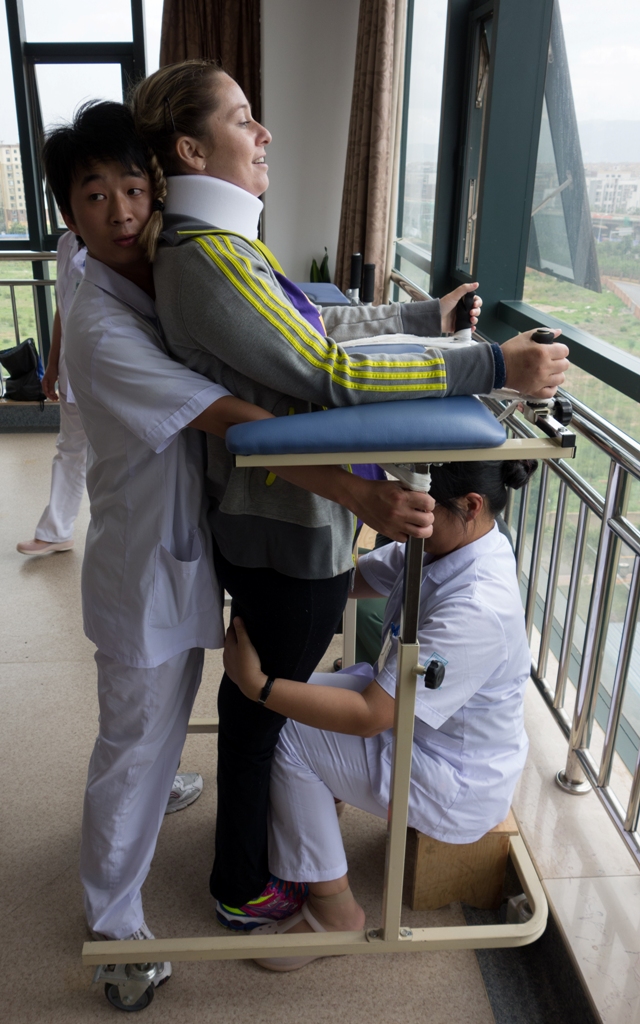
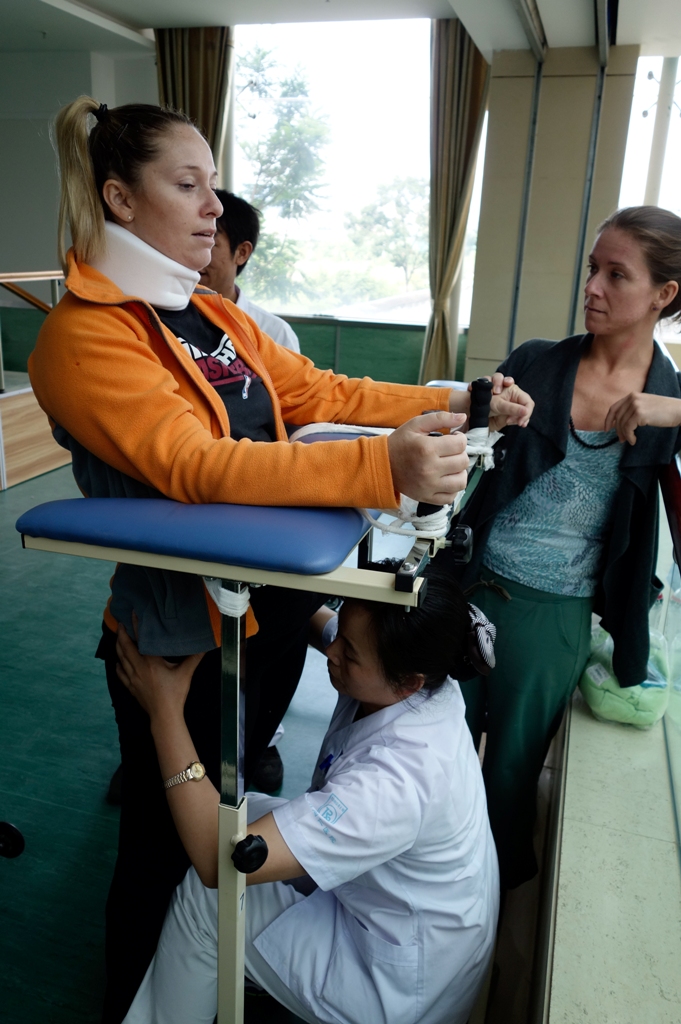
I doubt the renowned U.S. Marine Corps boot camp has a tougher regimen than the one career Chinese army officer Dr. Zhu advocates.  We come here to work … to work as hard as possible, and so today I returned to Dr. Zhu’s boot camp!

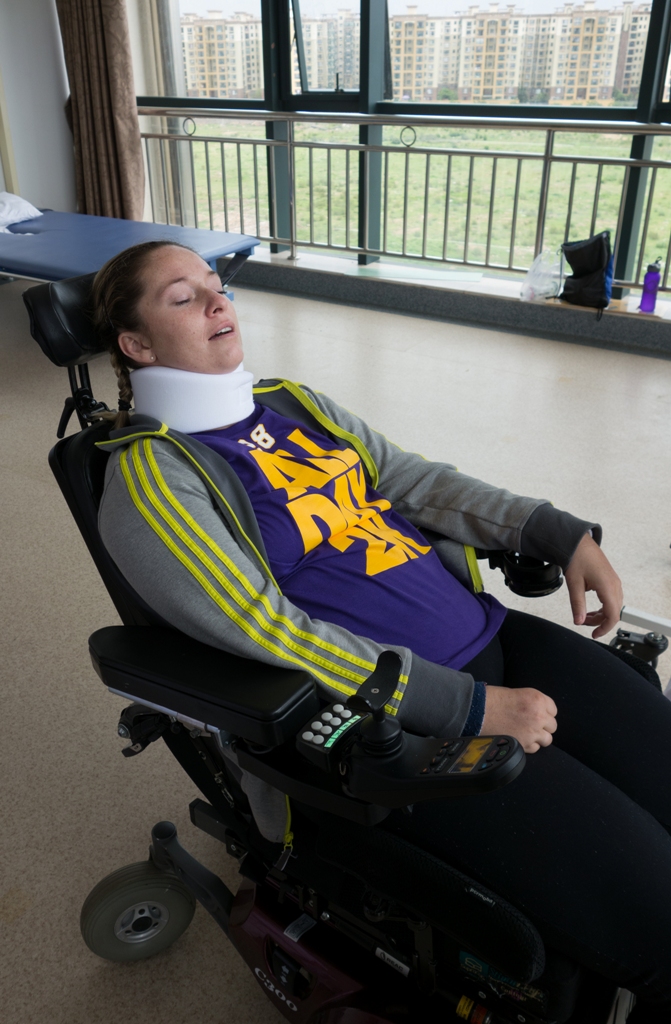
Altogether I managed to stand 4 times this morning for a total of 30 minutes standing time, and I managed another 30 minutes in the afternon on 6 attempts.  In between attempts I passed out a couple of times, so I gave it my best effort.

Out for the Count

Out for the count … 🙂

Over lunch break, Nu Jia and I were offered a tour of the terrific new SCI rehab facility nearing completion on the 2nd floor.  Wow!

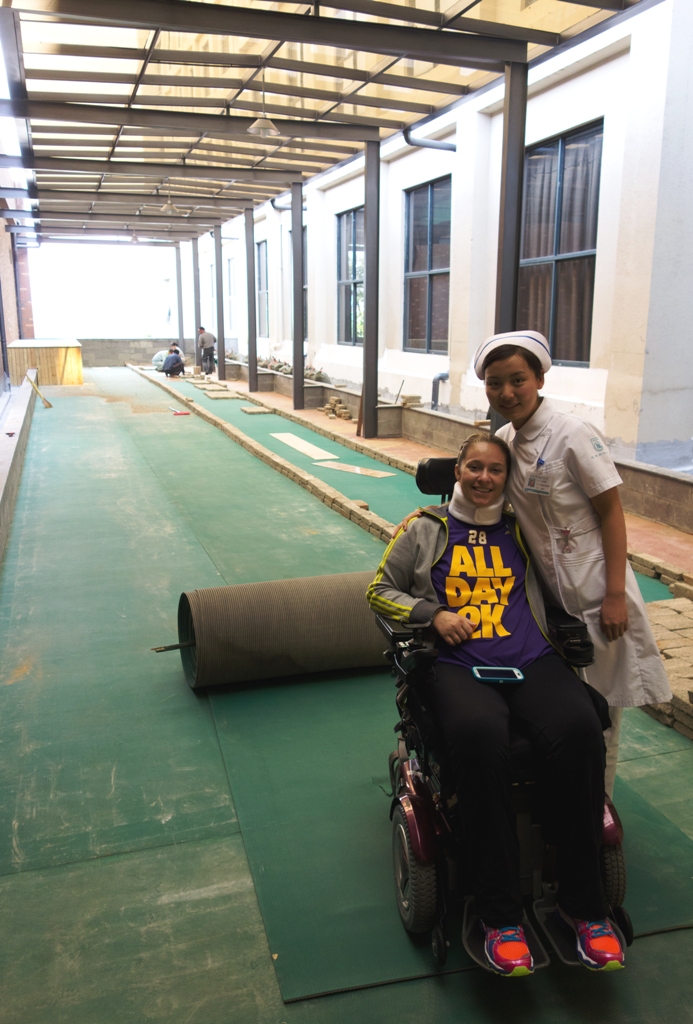
What a brilliant design … very open and bright with huge skylights and 2 walking tracks, one outside!

New Centre Tour

Grand tour begins ... 🙂

Indoor Track

Indoor rehab track with skylight dome …

OT Corner

Even OT challenges are to be covered …

Outdoor Track

Outdoor rehab track under construction

The new rehab center will be open by the end of this month and enable more international patients to participate as well as to live comfortably right in the hospital in brand new deluxe rooms on the 8th (top) floor.

In a subsequent post I’ll publish photos of the new 8th floor rooms as well as more photos of the new 2nd floor SCI rehab facility.  No less than 7 elevators connect the 8th floor to the 2nd floor. I’ve never seen anything like this new rehab facility in the U.S.  Of course, over here costs are considerably lower, and insurance companies have no say at all in how SCI patients are treated!

At Dr. Zhu’s request, the Kunming SCI program will from now on be called the “Kunming International SCI Centre” … KISCIC for short … and will welcome patients from all over the world.

KISCIC will offer both innovative SCI surgery from a surgical team led by the renowned Dr. Liu Yansheng as well as what I think is presently the world’s most effective SCI rehab protocol led by the the incomparably experienced Dr. Zhu Hui.

Toughing it out … pain + patience …

Standard

What a challenging, painful week this has been!

At the Tongren Hospital, most neurosurgery patients who participate in the Kunming Walking Program start standing balance practice about 15 days after surgery.  Dr. Zhu Hui has an interesting rationale for this fast-track protocol that I’ll cover in another post in the near future.

Yesterday was my 15th day since spinal surgery, so I went to the hospital to try to get back into the flow of the program. I managed to stand up successfully for 4 minutes without passing out  …  🙂

May 30 - standing after 15 days of surgery with Dr Zhu

Standing 15 days after surgery (to left Dr. Zhu Hui)

Yes, after being in bed for a few weeks it takes a while to get back your balance.  At least I was able to stand up bearing 100% of my own weight without a binder or pressure stockings, so my blood pressure is holding up pretty well.

However, I ran into some unanticipated and very painful difficulties.

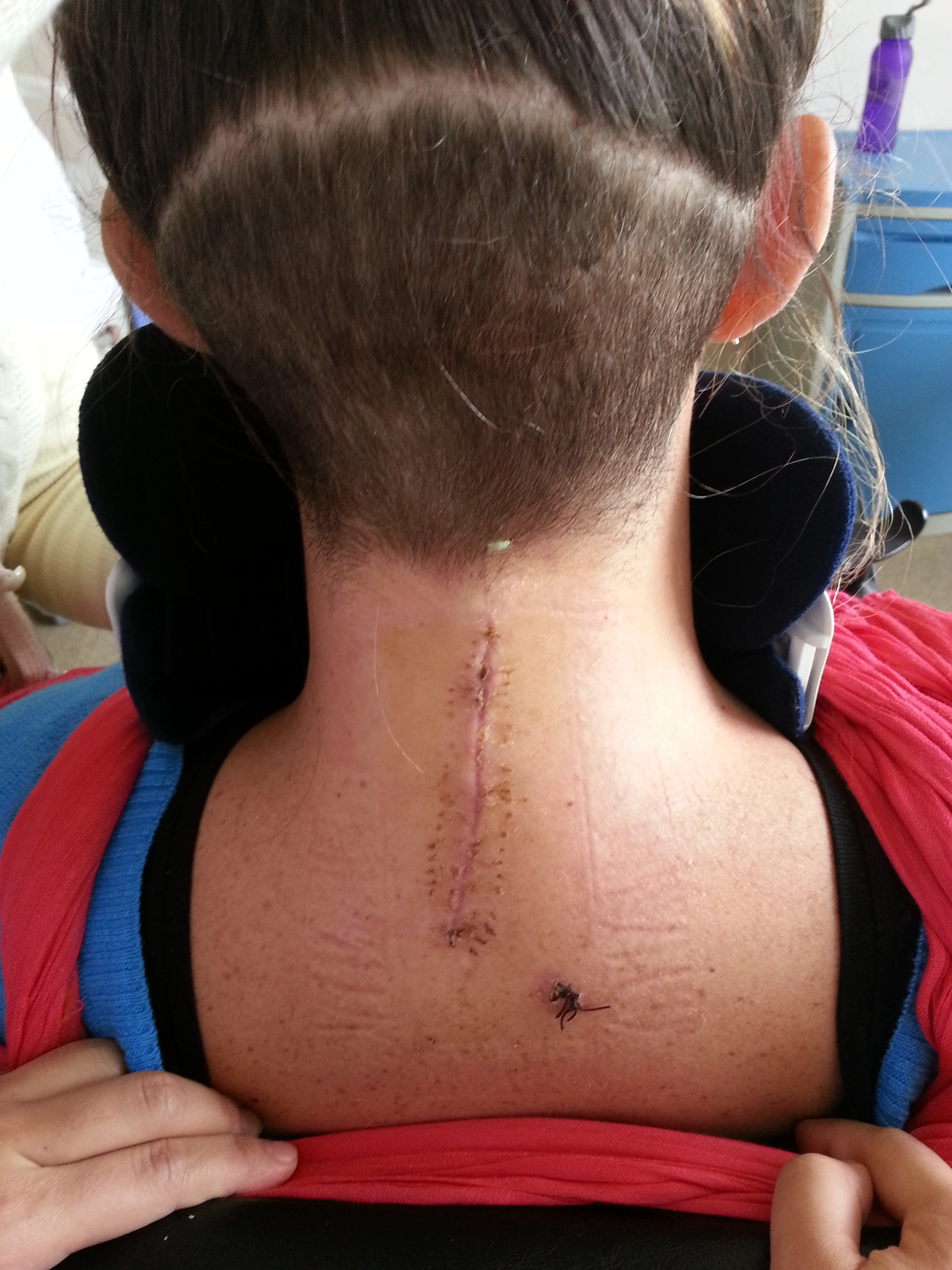
Unfortunately, the back-of-neck incision site of my surgery is still really painful, even though it looks to be healing fine.

15 days post-surgical scar… And of course my poor shaved head growing in:-)

How do you like the haircut?

I suppose this is understandable considering how many titanium rods and screws have been added to my spinal column!

Anyway, after I stood for the first time yesterday, I had such a severe reaction that it felt like I was breaking my neck again, so I had sit down right away and be taken back to a hospital bed to recuperate on my side for a couple of hours.

My Dad and I suspect that there’s still quite a lot of inflammation inside my neck, which has forced me back to bed at home for at least another few days or maybe as long as a week.  We’re sort of flying blind here, although my good friend Nu Jia from Guangzhou tells me she had pretty much the same experience after virtually identical surgery.

So the bottom line is that my Dad has me under house arrest right now, as I am unable to move my head freely left or right and almost any sort of exertion provokes severe pain.  But at least I have stopped taking painkillers for the time being, just relying on Acetephetamin to take the edge off.  We have both morphine sulfate and Tramadol in reserve, but I only want use them as a last resort.

When I first moved to China in March, the neuropathic pain was so severe that I got sort of addicted to painkillers … not the cleverest idea, of course, but in the circumstances they kept me from going completely out of my mind.

I must say I’m a little bored with bed rest, but I need to get these pain levels down before I seriously start the walking program again.

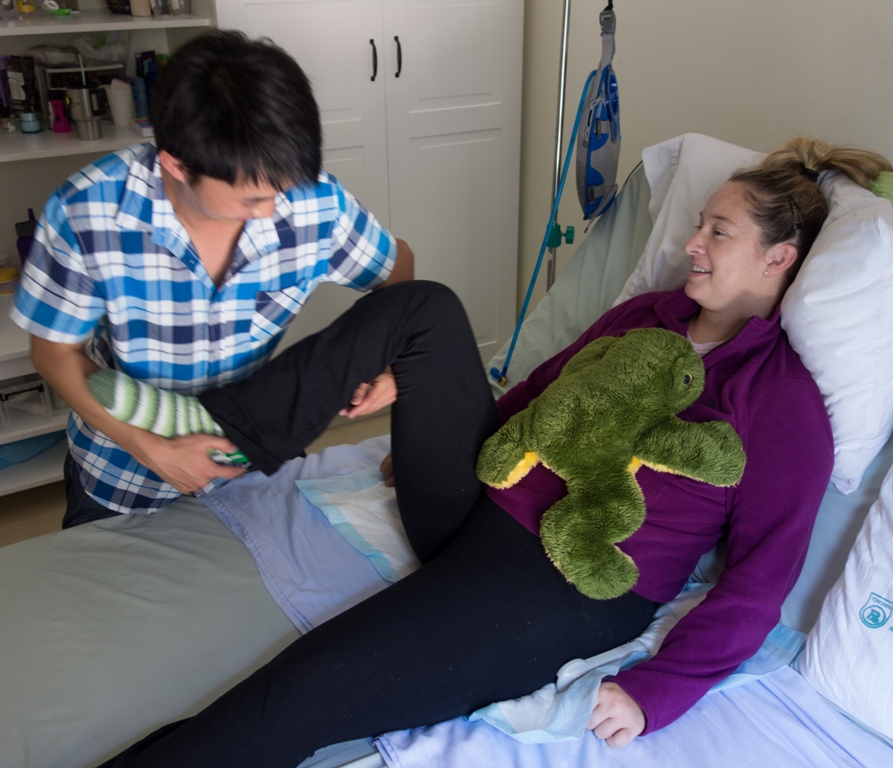
Every day in the afternoon I have Xiao Kong, one of my physical therapists, come over to the house in order to stretch me and work out my arms with weights.

Physical therapy aside, I have to say this is my favorite time of day because I have a lot of fun joking with 25-year-old Xiao Kong.  The Chinese are pretty reserved in their conversations, but Xiao Kong is such an adorable guy that you just want to eat him up like a cupcake!   So I mess with him a little bit, asking questions about his girlfriend, about what he does his free time, what kind of drinking games he plays, etc.

These topics are generally not talked about in public by the conservative Chinese, and I’ve never seen somebody’s face get so red so fast before!

Xiao Kong

 Xiao Kong working out Froggie and me!

Anyway, overall I’m sort of treading water right now, trying to be patient for the surgery inflammation to subside while still battling intermittent bouts of severe neuropathic pain.  I think the neuropathic pain comes as a sort of Dysreflexia response to the acute pain in my neck, but who knows?