Category Archives: Uncategorized

Shifting Focus (Part 1)

Standard

My new neighbor and friend, Suzanne Edwards, who arrived from England only two weeks ago, just underwent a successful spinal cord surgery to remove a large arachnoid cyst that was pressing on her spinal cord.  She’s been a great patient and is recovering quickly.

During Suzanne’s surgery, chief neurosurgeon Dr. Liu also discovered multiple bone fragments left alongside spinal cord by her original surgical team in England.  So this surgery turned out to be more important for Suzanne than she may have imagined.  Indeed, Dr. Zhu reported that the pressure inside Suzanne’s cyst was even greater than my own very high pressure in May.

It is unfortunate that in the United States and many other countries so many neurosurgeons are reluctant to operate inside a spinal cord, perhaps due to lack of experience with this admittedly tricky procedure.  The problem with cysts in or near the spinal cord is that often they continue to grow by filling up with fluid and building up pressure that results in reducing a person’s functionality as well as causing severe pain.  In my case, for example, an ascending cyst in my cervical spinal cord had already started to affect my breathing, not to mention causing intractable neuropathic pain.

In much of the developed world, neurosurgeons pretty much despair of helping spinal cord injury patients, especially those that are labeled “complete” injuries. These surgeons seem to conclude up front that most SCI patients will not regain motor function after surgery, and, therefore, the so-called standard-of-care is only to secure the broken vertebrae in what is known as a “spinal fusion” — which is essentially an orthopedic procedure that mechanically reinforces the spinal column.

In contrast, experienced Chinese neurosurgeons not only deal with mechanical stabilization but also open the spinal cord in newly injured patients to reduce as soon as possible the build-up of inflammatory pressure from the injury. This strategy results in much less secondary injury and consequent sparing of axons that would otherwise die off.  And this decompression strategy apparently explains why many Chinese SCI patients are able to benefit so much from rigorous rehabilitation, as I have repeatedly witnessed here in Kunming.

Unfortunately, in Miami I did not have the benefit of such progressive surgery, and thus I suffered typical secondary injury that killed off axons that might otherwise have lived.  Consequently, I have not so far benefitted from the Kunming “walking” rehab program.

Thus my primary goal now is to somehow reduce my persistent, severe pain levels.

A few days ago I was speaking by telephone with my Dad, who was in the Netherlands attending an international pain research conference spnsored by the IASP.

http://www.iasp-pain.org/am/template.cfm?Section=Home

Dad is presently on his second round-the-world “pain tour” as dealing with my incapacitating pain, and no longer physical rehabilitation, has become our top priority.

I mentioned to Dad that even if I regain no motor function during my time in China, as seems probable at this point, it will still have been worth coming over here, because my surgery was pretty much a life or death situation.  Before surgery the cyst had grown 30% in the prior 18 weeks and had started to impair my breathing.  So, a few months more and who knows what would have happened.

When you live with a major spinal cord injury and suffer every single day from a combination of severe neuropathic pain + allodynia … well, as I’m sure many of my readers can relate, walking no longer seems as important anymore as reducing systemic pain to a level where you could visualise having a meaningful life.

Maybe the best way to explain how long-term pain affects your brain is to consider having insomnia for a long period of time, say getting by on just 2 to 3 hours of sleep a night.  After a while, you start to hallucinate, can barely form sentences and feel like you’re going crazy. Long-term neuropathic pain kind of works the same way. It deprives you of sleep and over time just wears you down to the point where you can barely function.

With respect to the neuropathic pain, we are getting that much closer to finding a solution to importing the reagents needed to test lithium blood serum levels. The challenge is that the lithium reagents need to be refrigerated, and we do not want them to get stuck in customs. It has been a longer process than we anticipated, but are hopeful we can start in the next month or so.

As an alternative to drugs, I will be spending the next six weeks attempting to remap my brain so that my brain interprets pain signals in a less hostile and debilitating way. In the next week or so, I will dedicate an entire blog to how I’m going about remapping my brain to down-regulate its perception of pain.

Otherwise, I believe we have narrowed down the issues I’m having with intense shoulder and neck pain radiating pain down my right arm. It looks like I may have several pinched nerves in the C5-C7  area where I had my surgery this past May.

What I am experiencing feels like a radiating hot pain from my neck down to my shoulder blade and then over to my right shoulder and down my right arm. Throughout that area,  it feels like  somebody’s taking a knife and cutting open my muscles.

When there are pinched nerves involved, these damaged nerves can actually alos weaken the muscles they control, and it feels like multiple pulled muscles at the gym. I’m working with several doctors in the United States to get to the bottom of this post-surgical injury, and if we find a solution I will follow up with e fuller account.  In the meantime, I’m still working with Ericko here in Kunming on electro-acupuncture and massage to ease the shoulder injury.
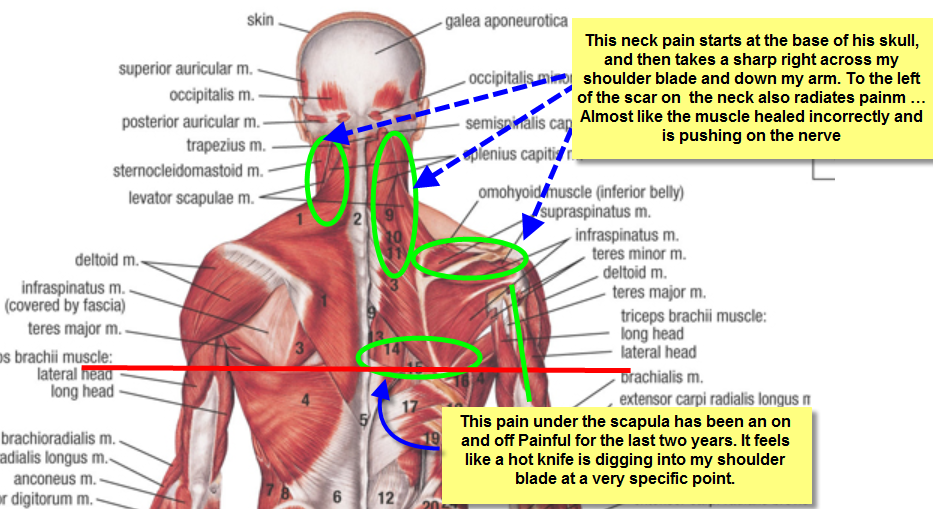
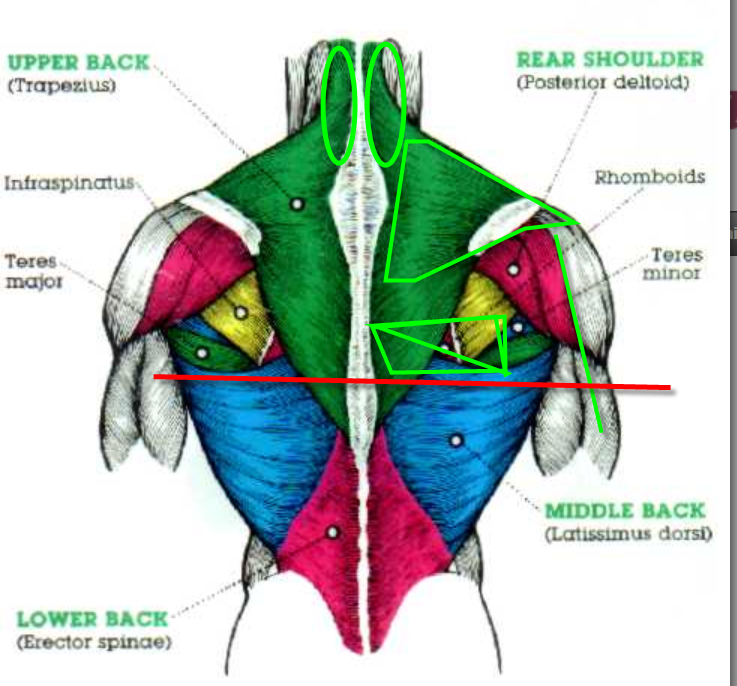
Ali Neck & Shoulder pain (1) 11-10-2013 10-40-16 PM Muscles2

I will post the Part II blog in the next few days and get into a little bit more detail about how I’m planning to shift my life focus in the months just ahead.


“Cat Poop Coffee” Welcoming Ceremony

Standard

Welcome Suzanne Edwards and family!

Suzanne arrived last week with her mom, Liz, and her dad, Jeremy.  They arrived late Wednesday night and showed up on the 2nd floor of the Tongren Hospital bright and early Thursday morning.

Now that is what I call dedication 🙂

Suzanne and her lovely parents made their entrance into the 2nd floor rehab room accompanied by a swarm of doctors, PT’s and, naturally, Dr. Zhu Hui. The English translator who has been hired to help Suzanne and her family was not yet on the scene, so they all came directly over to me and asked that I serve as translator for the day.

All the Chinese patients’ eyes were glued on the exotic new foreign patient.  If you have not gathered from my previous blogs, foreigners in Kunming, and especially South Kunming where we live, are a pretty rare sight.  Not to mention a pretty foreign patient like Suzanne in a wheelchair!   There are now three foreigners in the Kunming walking program.

I was showing Suzanne and her family around the rehab facility when Dr. Zhu asked me to help Suzanne with medical translation for her “ASIA” exam, which is a standardised test to determine one’s level of spinal cord injury. I have to say I was pretty relieved to have brushed up on my medical Chinese the prior week.

After the ASIA test and helping Suzanne get through her medical history for Dr. Zhu’s records, the foreigners in the program were invited to a very special coffee welcoming celebration. Now, what I’m about to describe to you is completely true and definitely one of the strangest welcoming parties I’ve ever attended.

Dr. Zhu invited us over to the kitchen area on the second floor rehabilitation room for a welcoming ceremony. It is pretty much understood in China that most Westerners love coffee so, whenever Yunnan locals have the chance to serve coffee produced right here in China, naturally the opportunity is not easily passed up.

Dr. Zhu explained to us that the celebration coffee on offer for us was “made right here in Yunnan province” …. by cats!

We turned to one another other with puzzled expressions, wondering what a cat has to do with making coffee?

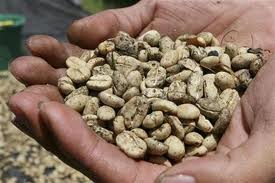
Dr. Zhu then went on to explain that there are very special Asian Palm Civets (essentially they look like Asian rodents but are related to the cat species) who are fed locally-grown coffee beans. Once again, we looked at each other but now with  unsettled feelings in our stomachs, perhaps sensing what might come next.

… Wait for it … yes, the coffee beans are eaten by the cats and then excreted, because these cats cannot digest the coffee beans properly.  The undigested and excreted coffee beans are then put through some kind of “purification process” before being ground up to make coffee.  Producers of such coffee beans argue that the process improves the coffee through two mechanisms — selection and digestion. Go figure!   Digestive juices of cats may improve the flavor of coffee beans for some people … but not for me!

Maybe no surprise then that the actual labeling on the package of this coffee, in Chinese and English, is “Cat Poop Coffee.”

I have to say the Edwards family were great sports, and we  dutifully drank our cat poop coffee! I could only think to myself … Wow, this is a first!  And as I do not have many “firsts” these days, well … Welcome to Kunming, Suzanne, Liz and Jeremy.

Civet1 Civet2 Civet3

I case you might think I’m making any of this up, check out this Wikipedia page and can see for yourself!

http://en.wikipedia.org/wiki/Kopi_Luwak

Now here’s a real kicker … one would think that this type of coffee would be rather inexpensive, but no, it is actually the most expensive coffee in the whole world. Cat Poop Coffee retails for US$700 per kilogram!!!

Indeed, this “coffee” has become so popular in China that there are now specialised coffee shops opening up all over Shanghai and now moving down south that devote their shops solely to “cat poop coffee.”

Care for a caramel cat poop machiato?

11-6-2013 3-15-05 AM

On an unrelated note … my dad left for Holland today to attend an international post-surgical pain research conference.  Kunming – Beijing – Amsterdam.  Good thing he’s not bothered by jet lag!

http://www.brainandpainnijmegen2013.nl/

My neck pain and shoulder pain have been getting progressively worse over the last few weeks, to the point where my productive at-screen day has been reduced to just two or three hours. My Japanaese electro-acupuncturist/masseuse, Eriko, can feel hard little balls on the left and right side of my recent surgical scar, which are presumably hardened scar tissue from the surgery. When she presses on these spots, I get a violent shooting pain down my right neck over to my right shoulder and into my scapula followed by shooting pains down my right arm. We hypothesize that several muscles must have healed incorrectly after the surgery and are now pushing on major peripheral nerves.

So my Dad has temporarily set aside regenerative medicine as he main research focus in favor of the neuroscience of pain, which is, of course, a major life quality issue for a large percentage of the SCI population, not to mention for cancer therapy survivors and millions of others.  Indeed, chronic pain is reported to affect as many as 25% of the American population.  So pain is a global issue, but the neuroscience of pain is a field of its own.  Thus my Dad has his work cut out for him!

Meanwhile, I’m working several times a week with my acupuncturist, Ericko, and I think we’re making slow progress, but I will be very excited to see what my Dad brings back from the IASP conference Holland.

For blog readers interested in pain for any reason, you might like ot have a look at the IASP website …

http://www.iasp-pain.org/am/template.cfm?Section=Home

I posted about a month and a half ago that I was about to start the China SCI lithium protocol for neuropathic pain. We are still working with the Kunming Medical School to obtain the reagents needed to test my blood serum lithium levels. However, the reagents still have not arrived!  So, when my Dad completes his second pain tour in Europe at the end of this week, he’s going to bring the lithium reagents back with him so that we can get on with this protocol in December.

Unfortunately, the severe neck pain + the persistent neuropathic pain + cripplng allodynia pretty much knock me on my butt most days, so right now I am only able to go to the gym 3 (or at most 4) days a week. Also, I’m not walking yet even though my new German knee brace works wonderfully.  The reason is that when I’m standing in the walking frame and attempt to walk, I have to push down with my elbows and shoulders in order to support and balance my upper body.  But pushing down with my elbows naturally forces all the pressure into my neck, and the shooting pain immediately forces me to sit down right away.

With that said, every day we are working on new solutions to chronic pain.

I remain confident that one day something we try will work!

🙂

Electro-Acupuncture!

Standard

First a little background.

Pain continues to haunt me day and night and recently comes in three flavors:

😦

Neuropathic pain, which is persistent Central Nervous System (CNS) pain that is aggravated by many kinds of environmental stimulation, even strenuous rehab.  About 15% of spinal cord injury survivors suffer from severe neuropathic pain.  Unfortunately, I drew one of those wild cards.  As for what causes this, see …

http://en.wikipedia.org/wiki/Neuropathic_pain

Allodynia is more of a peripheral pain syndrome but is linked closely with CNS damage.  For me, Allodynia results in my arms and hands being hypersensitive to touch and feeling all the time as glass is being ground into them and sometimes as if they were on fire.  As for what this is all about, see …

http://en.wikipedia.org/wiki/Allodynia

Finally, since my surgery in mid-May, I have suffered from acute post-surgical pain emanating from the surgical incision in my neck down my right shoulder and arm … feels like someone twisting a knife under my shoulder blade.  It’s often so bad I can’t sleep at all.

Post-surgery pain is obviously a known phenomenon, although no one here in Kunming seems to have any idea what to do about it.  That’s why my Dad is flying over to Amsterdam on November 5th to attend a major international research conference on post-surgical pain.  See … http://www.brainandpainnijmegen2013.nl/

Meanwhile, our latest pain initiative, acupuncture,  aims specifically to get a handle on the acute post-surgical neck pain.  For readers not too familiar with this ancient Chinese therapy, see …

http://en.wikipedia.org/wiki/Acupuncture

Day One

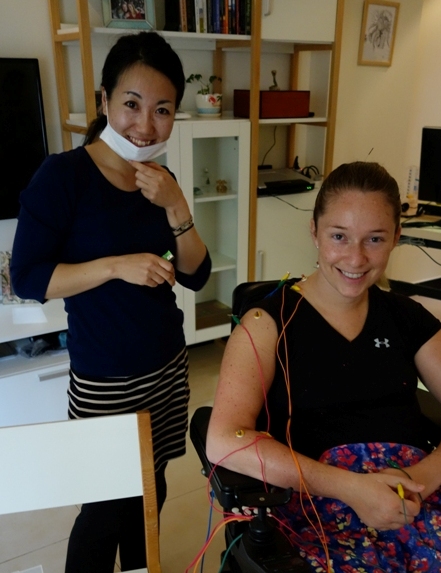
Eriko with me on Day One

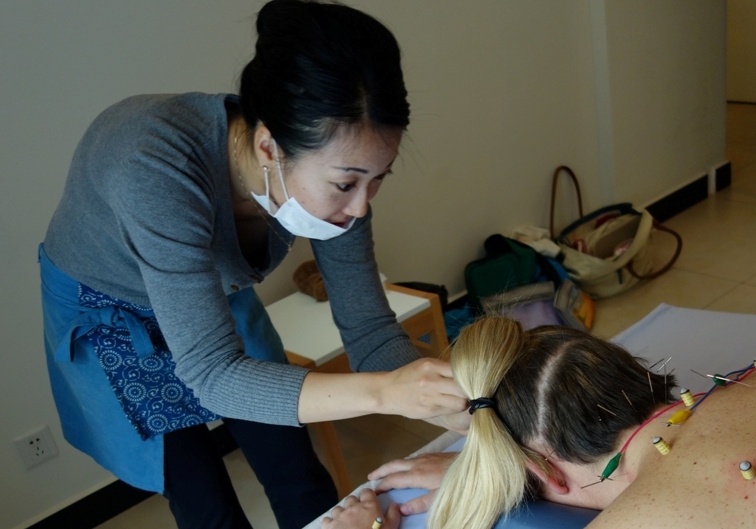
Obviously acupuncture has a major following in China, but my acupuncture practitioner, Eriko, is actually a young Japanese woman who practices in Kunming.  She is herself the daughter of a veteran Japanese acupuncture expert, so Eriko literally grew up with the practice.

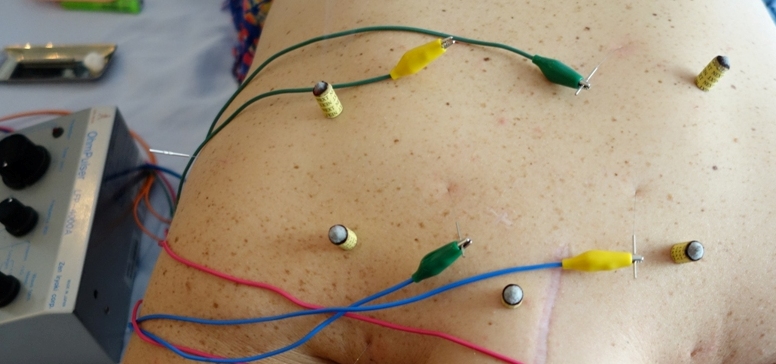
We started off with traditional needles but progressed quickly to a 21st century variation on traditional acupuncture, called electro-acupuncture.  Here’s a short piece on what this is all about …

http://www.acupuncturetoday.com/abc/electroacupuncture.php

Eriko’s feeling is that electro-acupuncture is often better suited to pain management.  In western culture, TENS units work on a similar principle and are in everyday use for pain management, using skin patches instead of needles to stimulate specific parts of the body.

Eriko has just gotten started with me (3 sessions to date) so I’ll have more to report on all this in coming days.  Meanwhile, here are a few more photos of Eriko in action with me.  I explain further details of what you’re seeing in future posts.

Eriko Setting Up  Pins + Needles  Eriko Focused

On a final note today, my titanium leg brace from Germany has just arrived after being stuck in China customs for no less than three weeks! I’m going to try it out tomorrow by standing with it and maybe even taking a few steps to see how the brace works.  I’ll take some photos tomorrow and keep you updated in the next week on rejoining the walking program.

News of the Week

Standard

 Welcome Suzanne Edwards!

This week I’ve had news that Suzanne Edwards will arrive in Kunming from London at the end of October.  Suzanne will be the first SCI patient from England.  Here’s a recent London newspaper story about her lovely family:

http://www.dailymail.co.uk/home/you/article-2385412/Life-doesnt-end-dealt-catastrophic-blow-A-young-woman-tells-shes-adjusting-paralysis-life-wheelchair.html

I’m really looking forward to meeting Suzanne and her parents after corresponding with her for several months.  And Suzanne has a terrific blog that I hope my own readers will enjoy …

http://sorryaboutyourlegs.com/

As you can see, she has the kind of gung-ho attitude that should enable her to make the most of the SCI rehab program here in Kunming.

Suzanne also has a lower level injury than my own, and thus she is perhaps the ideal candidate for the Kunming walking program.   She wants to work very hard on her rehab, an attitude that will surely serve her well over here in China!

Acupuncture Begins

Apropos my chronic pain, we are presently waiting for the Kunming Medical School lab to receive the reagents needed to test my Lithium blood serum levels.  Then I can get cracking on the China SCI Lithium protocol.

China2011_Lithium_Trial

Meanwhile, in recent days I’ve gotten started with acupuncture treatments and will soon find out if I am what’s known as a “responder.”

Given how accustomed I have unfortunately become to continuous pain, it’s probably no surprise that the acupuncture needles don’t bother me much … in fact, hardly at all.

I will be using acupuncture to initially target the acute post-surgical neck pain that has surprisingly persisted for months and which is causing the acute radial pain in my neck that spirals down through my right arm. We hypothesize that is most likely a muscle pushing on a nerve. This is a really debiltating problem for me, so if I am a “responder” then we will continue acupuncture to work on the neuropathic pain issue in case the lithium does not work for me.

My thinking is to give acupuncture a fair chance, perhaps a couple of months.  I’ll be working with accomplished practitioners from China and Japan, and I am also grateful to be working with an experienced American practitioner who lives presently in Kunming.

The Knee – Take 3

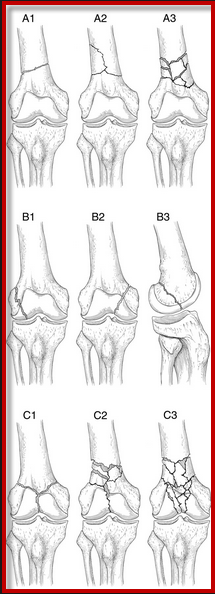
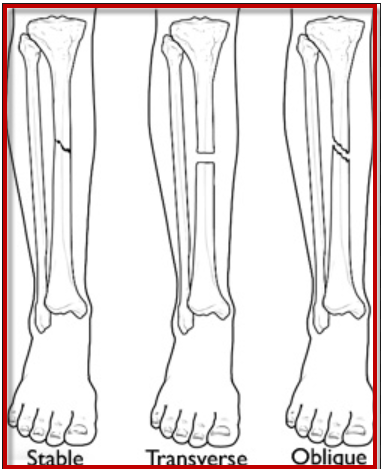
Since my last post, there have been further developments regarding my broken leg.  It turns out that both my femur and tibia were severely fractured here in June. Those are the two strong bones in the body!  To be more specific I had a distal femur fracture and a proximal tibial shaft fracture.

Femur FractureExamples of Femur Fractures

Tibial Fractures Examples of Tibial Fractures

Because the injury was not initially diagnosed or treated correctly, my leg has healed in a permanently deformed position, a condition known in the orthopedic world as Genu Recurvatum … http://en.wikipedia.org/wiki/Genu_recurvatum.

It is not yet clear how or even if this leg could be surgically repaired, because the ligaments have been so hyper-extended that they may not be able to return to their original size and shape.  Here’s what my broken leg looks like today:

Right Knee

Compare the normal left leg to my hyper-extended broken right leg.

So my parents have ordered a custom-designed titanium leg brace from Germany that is expected to arrive here in Kunming this coming week.  With the new leg brace, I hope to get standing safely again and may even, finally, be able to participate in the Kunming walking program.

The Knee – Take 2

Standard

Regular readers will recall that I’ve had a pretty difficult summer, being wracked with repeated “breakout” pain crises, too often reaching beyond Level 10 … morphine territory!

And my SCI readers will surely know that sudden severe pain for a paralyzed person can be set off by Autonomic Dysreflexia (“AD”) – the body’s confused response to an injury or an internal problem that often is not immediately obvious.

Even an ingrown toenail can kick off an AD crisis with spiking blood pressure and breakout pain.  The challenge, typically, is to figure out the source of the problem and do something about it as soon as possible.  An overfull bladder can be emptied; an ingrown toenail can be cut away, etc.

Well, this summer we knew there was something wrong with my right knee, and X-rays revealed the femur had been broken.  The hospital staff told us that the break was an “old” one, probably from a couple years ago they concluded.

While I couldn’t recall when this might have happened, that my right leg had been broken was clear enough.  And I thought that maybe the ligaments had been either stretched or torn in June when I first tried to stand and walk a few weeks after spinal cord surgery.

When the severe pain breakouts persisted week-after-week, indeed right through the summer, my Dad began to suspect something else might be going on.

But what?

So my mother flew back to the U.S. a few weeks ago and took along with her both X-ray and MRI images of my knee that has been made in July.  The idea was to retain the services of an experienced orthopedic surgeon in Miami for a second opinion and some advice on what to do next about the broken leg.

My Mom contacted an exceptionally experienced orthopedic surgeon specializing in sports medicine and asked him to take a careful look at these images.

Here’s the surgeon she visited:

http://www.herrerasportsmedicine.com/dr-mauricio-herrera-miami-institute.html

Dr. Herrera took a close look at both X-rays + MRI and concluded:

  1. No ligaments had been stretched or torn.
  2. A major bone in my knee had been “recently” broken … meaning specifically, he said, “within the past two to three months.”

His diagnosis:  “Non-displaced distal femur fracture”

Here’s a link to a paper that describes my injury:

Distal Femur Fractures

Dr. Herrera said that if I had been his patient at the time of the injury, my leg would have been secured immobile in a straight position for at least six weeks.

In the event, however, the injury was not correctly diagnosed when it occurred.

As a result, day-after-week my right knee was bent for me to sit in my wheelchair and repeated attempts to get me to stand and even “walk” were made by the rehab staff.

So you see, day-after-week I was grinding away on a broken leg!

😦

No wonder, then, I’ve had such seemingly inexplicable, severe pain … or that my knee remained swollen for over two months.

Well, today we just have to play the disappointing hand we’ve been dealt and get on with life.

Tomorrow I’m having another set of X-rays and MRI (soft tissue) images made that we’ll send over right away to Dr. Herrera to assess how things look right now and take advice on anything I should or should not be doing going forward.

As far as I can tell, the big femur must be healing itself, because I can now bear my own weight standing without the goose bumps, drenching sweats and fast-spiking neuropathic pain that I still had just a few weeks ago.

Anyway, I suppose I’ll get over it.  A lot of good complaining will do me!

Next up will be our attempt to execute Professor Wise Young’s ChinaSCI Lithium Protocol to see if this can drive a permanent reduction in neuropathic pain levels.

Here’s a link to clinical trial we’re trying to replicate:

China2011_Lithium_Trial

We have plenty of lithium carbonate on hand, but we have not yet identified a lab in Kunming that can measure blood serum lithium levels.  My Dad is presently working on that and just today got a very promising lead at the teaching hospital affiliated with the Kunming Medical School.

Pain Management – Take 1: Lithium Carbonate Protocol

Standard

During the past month, SCI patient registration at Tongren Hospital has picked up, with an influx of Chinese patients ranging from paraplegics to high-level quadriplegics.  It has been really nice getting to know the new patients, and especially because their attitudes are just so positive.

Next week I’ll post some pictures of patients presently in the Tongren SCI rehab program, which is definitely gaining traction in China.

My knee is still swollen but is on the mend … seems to be healing and getting stronger again.  However, to prevent another setback, I decided not to walk over the last few weeks, instead settling for standing balance in 30-minute stretches.

Needless-to-say, I am disappointed not to be moving ahead as quickly as I had hoped with the walking protocol, but if I keep trying to walk too quickly I am never going to heal what I believe is a seriously stretched ligament.  So I’m presently wearing a full length leg brace whenever I stand, which prevents my knee from hyper-extending when I am standing. This really seems to help.

On the pain front, my Dad has returned from his “World Pain Tour” and we have just begun to discuss all of his findings. In my next blog I will update you further on various pain management solutions and what I plan to do next to see if we can solve this problem.

After speaking with numerous doctors and scientists, we are working on the premise that anterior (front side) arachnoid cyst pressure on my dorsal root ganglia was likely the original cause of the neuropathic pain. The cyst-lancing surgery on May 14th was meant to have relieved this pain, but it failed to do so, evidently because the cyst had been left in place for too long, producing “pain memory” that is challenging to erase.

Of course, neurons can “change their mind” (refer recommended book “The Brain That Changes Itself”) and we are pursuing various strategies to this end.

My first attempt to re-program my mis-behaving neurons will be based on the Lithium carbonate protocol proposed by Dr. Wise Young (M.D., Ph.D.) and recently subjected to clinical trials in China.  Here’s a link to the trial paper on which I’m basing this decision.

Dr. Young has been at Rutgers University since 1997, where he serves as Professor and Chair of the Department of Cell Biology and Neuroscience.

Here is a more complete biography of Dr. Wise Young (http://keck.rutgers.edu/center/center.html).

For readers who may not be familiar, Dr. Young also founded and serves as moderator for the CareCure community forum … www.carecure.org … which provides extensive information on pretty much everything related to spinal cord injury.

Dr. Young was actually here in Kunming several days ago, as he works closely with Dr. Zhu Hui and the Kunming Walking Program. Wednesday afternoon he came over to visit at my apartment for a few hours, during which we discussed the ChinaSCI Lithium protocol in considerable detail.

This protocol is based on a published double-blind clinical trial in which half the subjects had placebo.  I have attached to two papers published on this trial:

1.) Spinal Cord 2011 Yang

2.) Spinal Cord 2011 Wong

Interestingly, the ChinaSCI clinical trial did not support the hypothesis that Lithium carbonate might promote motor function recovery, but patients with high levels of neuropathic pain found their pain levels were not only greatly reduced but also that the pain stayed reduced long after the trial ended.

So the Lithium carbonate was not acting as an analgesic (pain killer) in the ordinary sense of the term, because the good results continued without the drug.

Rather, it appears that Lithium changes the behavior of pain-related neurons, whether in the spinal cord or brain.  In other words, Lithium seems to reverse the earlier pain memory imprint and changes neuronal circuitry in the brain in such a way as to perhaps permanently reduce neuropathic pain.

We’ll see soon enough!

For scientifically minded readers of this blog, Dr. Young explained to me that lithium activates and inhibits multiple phosphokinases and inhibits several phosphatases, all of which converge to inhibit an enzyme called glycogen synthetase kinase 3-beta (GSK3b), which normally inhibits several major nuclear factors that stimulate neuronal growth and stem cell proliferation.

Several laboratories have reported that Lithium stimulates regeneration in the spinal cord and also causes neural stem cells in the brain to produce more neurons.

Lithium is also known to increase the volume of gray matter (the part of the brain containing neuronal cell bodies, as opposed to white matter which contains mainly myelinated axon tracts) by as much as 15% after only 6-12 weeks of oral lithium.

Just imagine:  Ali with 15% more gray matter! 🙂

I should know in about two weeks if Lithium has any effect on my neuropathic pain, but I intend to follow the protocol precisely, which requires maintaining specific Lithium blood serum levels over the course of six weeks.

Here is a random Funny Fact for you on Lithium:

The popular soft drink “7 Up” had a Lithium-based formulation early in the 20th Century, back in the good old days when Coca-Cola was formulated with real cocaine!

I will go into the details of our plans B, C and D in subsequent blog posts in case the  Lithium proves less successful than I am hoping .

Meanwhile, the data on use of Lithium carbonate for reduction of severe neuropathic pain is obviously promising.

The next challenge we are presently battling is this chronic post-surgical neck pain I have developed.  Directly on my scar and several inches in either direction around my scar, I have developed what feels like a radiating pain up and down my neck in combination with severe knots.  It is now been almost 4 months since my surgery, and we have determined that this persistent, acute neck pain not normal.

I do not yet have a hypothesis for the cause of this intense pain, but as a first step I’m going to have a new MRI of my cervical spine made next week. I’ll keep you updated on whatever we discover.

Pain Management Discoveries

Standard

First of all, I would like to apologize for not posting for the last two weeks. My pain has been pretty overwhelming, so I have been sidelined despite best intentions to publish.  As promised, here’s the first of several planned pain management posts.

My Dad is presently heading back to Asia from what I not-so-jokingly call his World Pain Tour.

Earlier this summer Dad decided he needed to set aside, temporarily, his global investigation of innovative research on SCI motor function recovery.  Consequently, he’s been working recently to get a better understanding of the severe neuropathic pain that afflicts approximately 15% of SCI survivors – notably including me!

Unfortunately, pain research involves a very different branch of neuroscience, say than stem cell research, so Dad had to basically start from scratch.

First he met with Professor Chi Wai Cheung at the University of Hong Kong, where Dr. Cheung heads up the new interdisciplinary Laboratory and Clinical Research Institute for Pain Management.

And then Dad headed off over the Pacific to visit with researchers and clinicians across the U.S.  Eventually, he ran out of time on this trip to call personally on leading pain investigators and clinicians in the U.K. and Europe, whom he hopes to meet in the next few months.

Nonetheless, some very interesting insights have already emerged.

The most important of Dad’s discoveries has to do with the phenomenon known as Neuroplasticity and the possibility that I am unlikely to attain relief from persistent severe pain until we figure out how to re-map my brain!

This is because once the spinal cord and brain have been under sustained pain-generating pressure from an injury, it appears the “pain memory” can imprint such that severe pain remains even after the original source of the pain is removed.

In my case, think about the large arachnoid cyst mashing my spinal cord back into the sensory neurons of the dorsal root ganglia.  For more than a year the increasing pressure tormented me, and then on May 14th my cyst is suddenly removed, but the pain remains.  Big disappointment, for sure, but in recent years neuroscientists have discovered that all sorts of neuronal functions, including pain memory, can be manipulated and changed beneficially.

Or think about the so-called “phantom pain” experienced by seriously injured soldiers … like the double-amputee complaining of severe knee pain.

Even such a thing as a “brain map” may come across to some of my readers as pretty far-out thinking, let alone the idea of trying to re-draw my own brain map to manipulate the functions of some of the 100 billion neurons inside my skull.

But for readers who may be interested in this, I can recommend an astonishing book that I just finished reading.  It’s titled “The Brain That Changes Itself” by Norman Doidge.  And it’s very well-written for a non-technical audience.

Anyway, while I grapple with ways to handle intermittent pain break-out crises (more on these drug-based options in an upcoming post) Dad and I will be assessing a diverse menu of brain-mapping options.   Already these range from the Qigong breathing techniques of Traditional Chinese Medicine … to modern hypnotherapy technique … to computer-based “games” designed by neuroscientists to alter how neurons “fire together to wire together” … and on our radar is also the short-term (6-week) use of Lithium carbonate that was the subject of a double-blind clinical trial led here in China a couple of years ago by Rutgers Professor Wise Young.

Dad once reminded me that humans think with ideas rather than with information.  And while he has already managed to gather up a lot of new information related to pain management strategies, the crown jewel of his current trip seems to have actually been an idea.

And that idea is that the pain being registered by my brain is likely to have resulted from neurons wiring together to encode an exaggerated pain message that can itself be changed.  Indeed, recent research suggests the prospects of being able to remap my brain, without drugs, to alter its pain memory look quite promising.

While this is admittedly leading-edge stuff, Albert Einstein is said to have defined insanity as doing the same thing over-and-over again while expecting a different outcome … sometimes referred to as a “hope spree” in the trading world.   So the way forward seems to exclude hope sprees as well as insanity … rather, innovation looks to be what’s needed to reduce my pain enough that I’ll be able to get on with a productive life.

🙂

Temporarily grounded until the fog clears

Standard

This past week has been an especially challenging one, although I have managed to come out the other side still fighting!

🙂

Last week I started to notice further increased neuropathic pain along with increased muscle spasms while I was participating in the walking program.  On a hunch, I decided to have a blood test (looking for elevated white cell count)  to see if I might have a urinary tract infection (UTI).  The results took a few days to come in, and so I continued on with my normal workout program in addition to walking 90 steps a day.

On Monday of last week I was informed I did, in fact, have a UTI.  But I did not think it very severe at the time, so I started on a course of Cipro (a common antibiotic to kill bacterial infections) and went on about my business.

Last Wednesday, as I was mid-way through my work out, I started to get the most awful chills, shivering, perspiring on my neck, dysreflexia, and generally felt like every muscle in my body was drained of all its energy. To top it all off I re-twisted my knee that Wednesday morning while I was walking — this because I did not have left enough upper body strength to prop myself up with my elbows as I usually do.

So I decided to head home and take the rest of the day off.  But things pretty much went downhill for the next 2 to 3 days and I was hunkered down in bed just trying to survive the week. I increased my antibiotics and had the hospital staff come over to the apartment to perform bladder flushes.  A bladder flush essentially circulates saltwater into and out of your bladder for an hour in order to flush out small bacteria, which can get caught in the grooves of the bladder.

To put a cherry on top of the cake, my body decided to hit me with laryngitis as well, so by Friday I could barely speak.

😦

This past week is what the Chinese call a “Mafan” week, which means trouble, sort of like Murphy’s Law in the States.  For my regular readers who also suffer from a spinal cord injury, I’m sure you are all too familiar with the impact of a  severe UTI and how it can just knock you on your butt!

But I’m happy to report that my UTI has settled down now, and I plan to be back at the gym this week. The one major setback, aside from the UTI, is the fact that I re-injured my wonky right knee.  My knee is now very swollen again and keeps me in what seems like a constant Autonomic Dysreflexic state.  I am presently figuring out what to do about the knee … perhaps a rigid knee brace might be useful to prevent hyperextension.

In the meantime, I have grounded myself from walking again and will just be standing for the next few weeks. I know it seems like setback after setback, but Rome was not built in a day either!

For my next post, I will further update you on some of the findings my Dad has uncovered on his current “World Pain Tour!”

“Pain, pain … Go away!”

Standard

Regular readers will know that I suffer from recurrent, severe neuropathic pain as well as allodynia in my arms and hands that feels like having a broken glass bottle ground into my forearm.

On bad days, the pain completely derails my participation in the innovative rehab program I came to Kunming for in the first place.  And when the pain is high enough, I can’t sleep at all without prescription sleeping medication like strong benzodiazepine-class drugs.

Reducing neuropathic pain had, of course, been a secondary but nonetheless key objective of my recent neurosurgery with Dr. Liu.

The top surgery priority, of course, was to attack the large (3 cm) and growing cyst inside my spinal cord that was beginning to interfere with my breathing and likely would have had me on a ventilator within a few more months.

My breathing is fine again today, so chalk up another surgery masterpiece to Dr. Liu and his team.

Unfortunately, the frequency and severity of my pain are essentially unchanged since before surgery.

“Sometimes untethering helps with pain, and sometimes it does not.”

Great!  😦

Wonder why the untethering surgery did not reduce my pain + what else I could do now?

Well, trying to answer this question is what has recently led to both my Dad and me stepping up the amount of time and energy we devote to global pain research.

While pain research is obviously neuroscience, clinical pain management has a very different cast of investigators and academic literature compared to, say, regenerative medicine.

So upcoming blog posts will report on what we learn about better management of neuropathic pain, and eventually I’ll group the pain posts in a separate tab here, as I did for my surgery.

Today I’m just laying the groundwork.

A recent U.S. Government-funded study reported that 75% of SCI survivors suffer from long-term neuropathic pain.  But Dr. Wise Young (M.D., PhD) from Rutgers University, a renowned expert on SCI,  says that just 15% of SCI survivors suffer pain levels severe enough to be debilitating on a daily basis.

One possible explanation for this is that if the original source of the pain is not relieved within a few months, the spinal cord appears to get imprinted with pain memory that sticks even when the original source of the pain is relieved.

Maybe think of this as the dark face of neuroplasticity!

In an upcoming post, I’ll be explaining the first thing we’re going to do to see if we can at least turn down the volume on this pain memory without resorting simply to addictive painkillers.

Meanwhile, my injured right knee is well enough again for me to have resumed the walking program on a limited basis.

The Walking Quad

Standard

This past week I finally managed to rejoin the Kunming walking program! On Monday, my big brother Colin supervised my walking for the first time since I injured my knee well over a month ago. My knee is not quite healed, but it is substantially better.

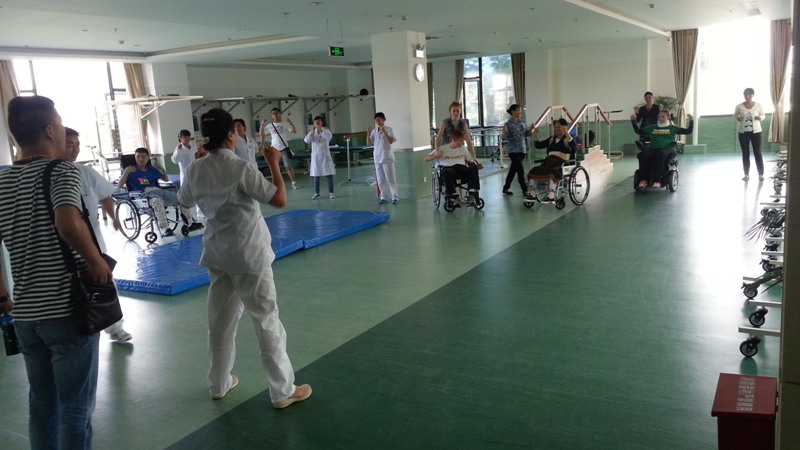
To start off the morning, we participated in our usual military song and dance routine … sounds silly but the morning routine is a lot of fun all the same and helps everyone get warmed up.

Our Morning Military Song & Dance

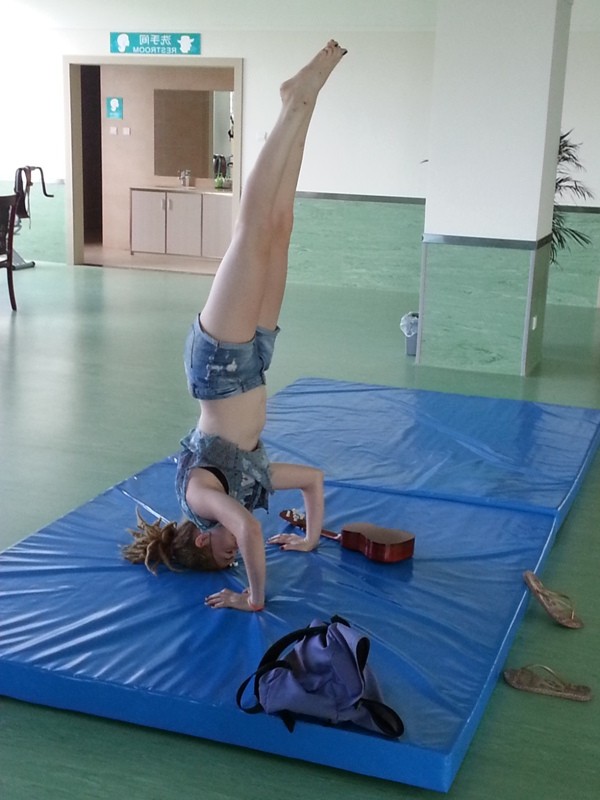
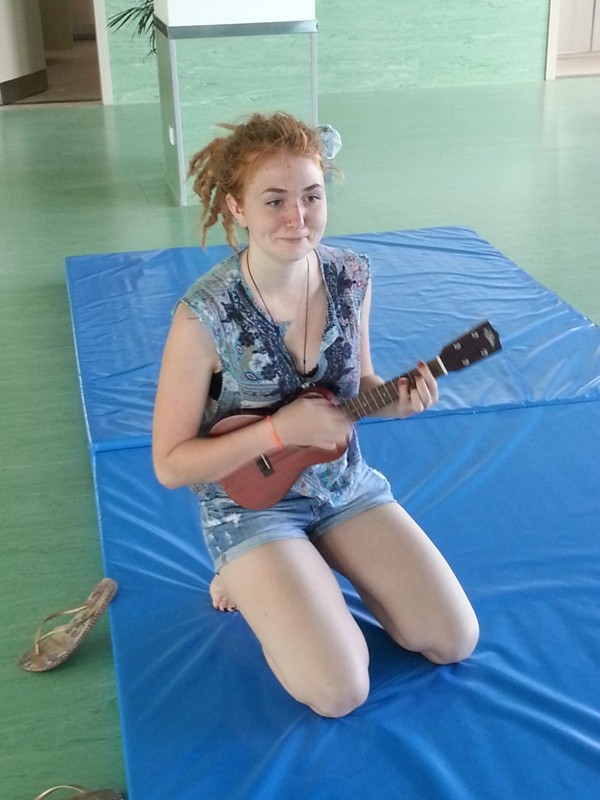
Before we started to engage with the day’s work, David’s 16-year-old sister Rusty, who also lives in Kunming, serenaded us with her ukulele and simultaneously entertained us with her impressive gymnastic skills!

🙂 

As my regular readers will know, Rusty’s brother David is 21 and has participated in the walking program for the last year.

Our Local Gymnast

Our local gymnast!

Our Morning Entertainment

Our morning entertainment

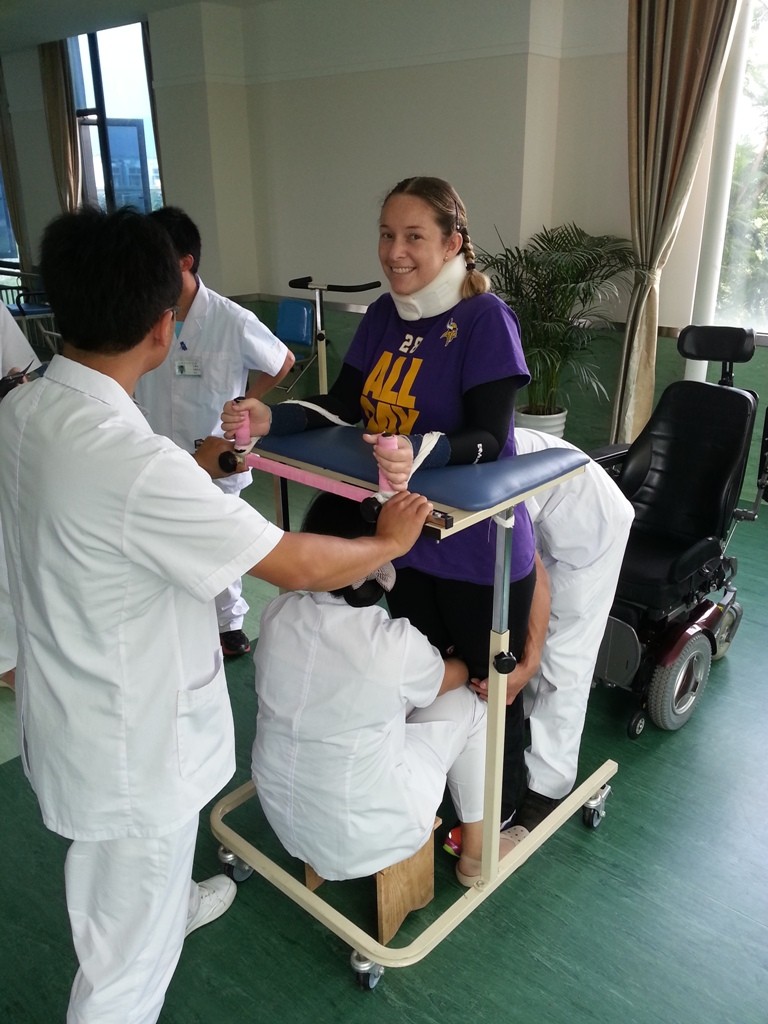
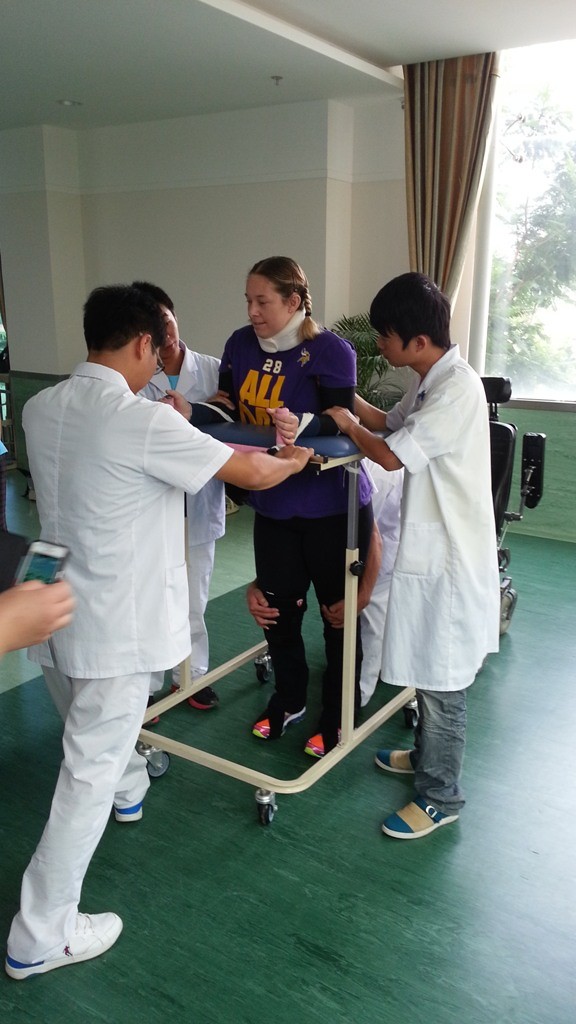
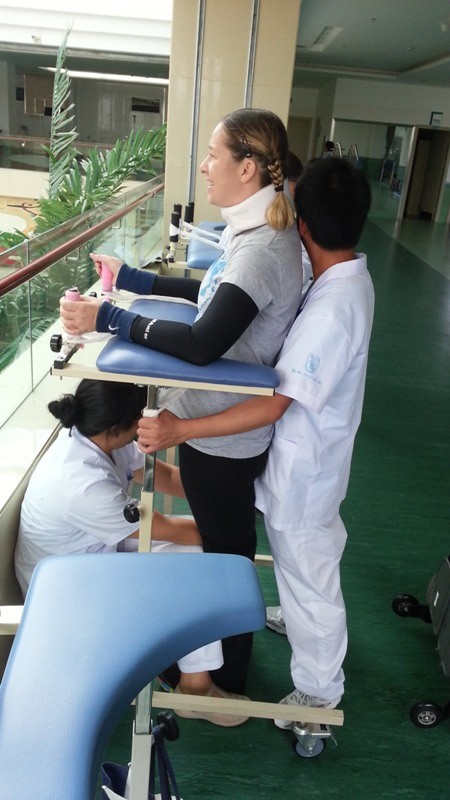
As you can see from the pictures below, the physical therapy team first helps me up to stand and remain stationery a few minutes so I have a chance to adjust my blood pressure.

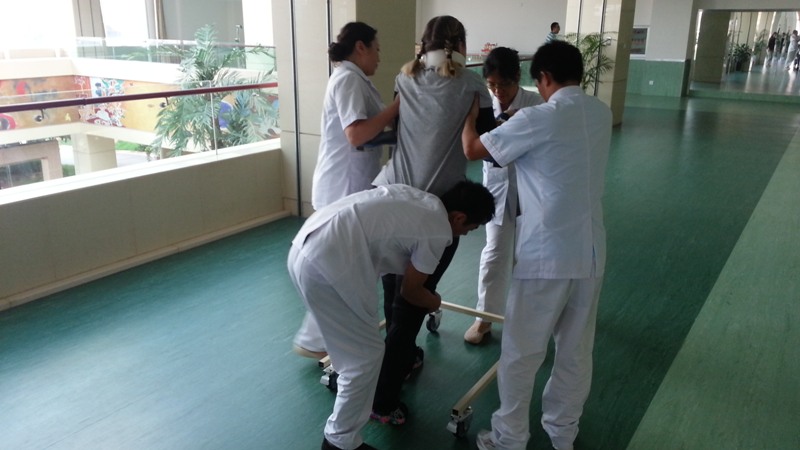
Once I start walking, there is one therapist behind me pushing my legs to walk, 2 therapists positioned either side helping me hold up my upper body, and one physical therapist in the front of the walking frame so it does not roll away from me.

Preparing To Walk

Preparing to walk

25 Step Tango

Starting my 25 step Tango!

360 Degree Perspective

Stepping up the Pace

Steady At The Helm

Relaxing with Xiao Kong for 30 minutes of standing after walking.

Walking is a lot harder work than I had anticipated. Initially, I thought it would be quite easy as somebody is just walking my legs forward one by one. As it turns out it is a lot more complicated than that.  I have to use my shoulders and upper body to push my elbows into the walking frame so I do not fall down.

As many of you know I am a C6 quadriplegic, which means that I presently do not have use my triceps. Before the accident I had no idea how useful the triceps muscle really is, and as it turns out the triceps muscle is one of the most important muscles in the arm. The triceps are used to push down, which is the name of the game when you’re using the walking frame. I have to compensate using my shoulders and surrounding muscles since my body currently does not recruit enough of the triceps muscle to be functional.

I was able to walk four straight days in a row and on each day increase my number of steps. I walked 25 steps on Monday, 53 steps on Tuesday, 55 steps on Wednesday and 90 steps on Thursday. I would usually walk between 20 – .25 steps and then rest for a few minutes before getting back up again.  I was supposed to go to the gym on Friday, but unfortunately my knee started to act up again so I played hooky with my brother.

My brother and I went to the Wyndham Hotel for a scrumptious sushi lunch followed by a couple of cappuccinos with a pair of Padron cigars. 🙂

Cigar

My idea of heaven!

My brother leaves this Sunday and I cannot tell you how incredible it has been to have him here these last 10 days.

I promised many of you a blog on my Dad’s world pain management tour, which I’ll post mid next week.